ETHNOMUSICOLOGY IN INDIA
BRINTALI ACHARYA
Research Scholar, Tripura University (A central University ), Tripura
Abstract
Ethnomusicology is a field that combines several disciplines to study music as part of culture, society, history and human life. It looks not only at the elements of music like melody, rhythm, scale and structure but also at the people who make music. It also studies the communities that keep music alive, the events where it is played, and the meanings it holds in society. India holds a special place in ethnomusicological studies due to its rich and varied musical traditions. Indian music includes Hindustani and Carnatic classical styles, regional and folk music, tribal and indigenous sounds, religious and devotional music, theatrical and dance music, film scores, popular music, modern fusion and practices of people living abroad.
The growth of ethnomusicology in India has been shaped by ancient Indian music traditions, records from the colonial period, the rise of Indian nationalism, research after independence, field-based studies and current interdisciplinary methods.
This article explores the meaning and growth of ethnomusicology. The history of Indian music studies of classical music, folk music, tribal and regional traditions, music and religion, music and identity, oral learning, musical instruments, and research methods used in the field. The impact of colonial rule and nationalism, popular and film music, globalisation, technology, music archives, preservation efforts, ethical concerns and the future direction of ethnomusicological research in India.
Keywords: Ethnomusicology, Indian music, folk-tribal-raga music & oral tradition, music and culture, Indian ethnomusicology
INTRODUCTION
Music is one of the most significant ways in which people express feelings, identity, memories, spirituality, social connections and cultural beliefs. Every society develops musical practices that show its history and how it views the world. Music is often part of religious events, farming, celebrations, weddings, funerals, plays, political actions, leisure activities and daily life. The main focus of ethnomusicology is to study these musical practices in the context of their societies and cultures.
Ethnomusicology is different from the study of music composition or theory, as it looks at music as something people do. It raises questions like ‘Who plays the music?’
For whom is it played?
On what occasions?
How is musical knowledge passed down?
What is the connection between musicians and their communities?
How do things like religion, social status, gender, politics, migration, technology and economic changes influence musical traditions? These questions are especially relevant in India because Indian music cannot be fully understood just by looking at musical symbols and theories.
India has a wide variety of musical traditions. There are two major systems of classical music—Hindustani in northern India and Carnatic in southern India. But these are only part of the country’s musical history. The nation also has more than hundreds of folk and community-based traditions linked to different areas, languages, jobs, religions, ethnic backgrounds and social groups. These include devotional forms such as kheyal, dhrupad-dhamar, bhajan, kirtan, qawwali, abhang, baul songs and temple music; theatrical styles like yakshagana, nautanki, tamasha and jatra; tribal music; work songs, songs for women, wedding songs, and lullabies; pastoral music, harvest songs, modern film and popular music.
However, it also points out that past research has mostly focused on classical traditions. Because of this, ethnomusicology plays a key role in broadening the understanding of Indian music beyond the classical forms. It allows for a detailed study of how real communities use music. It also helps in analysing how music changes, how culture stays the same, how people define themselves socially and how traditional and modern ways of music relate to each other.
Meaning and Scope of Ethnomusicology
The term “ethnomusicology” emerged in the twentieth century from earlier approaches known as comparative musicology. Comparative musicology often centered on classifying and comparing musical systems across different regions of the world. Over time, ethnomusicology evolved to take a more comprehensive approach, focusing on fieldwork, cultural backgrounds, social connections, musical performance and the everyday experiences of musicians.
Bruno Nettl’s work, “Theory and Method in Ethnomusicology,” is a significant contribution to the field.It highlights the importance of integrating musical analysis with anthropological and cultural research. As a result, ethnomusicology involves not only the study of musical sounds but also the social environment in which these sounds are created and experienced.
The field of ethnomusicology encompasses a variety of areas, including:
- Anthropology of music
- Sociology of music
- Music history
- Performance studies of musical vocal & instruments
- Religious, ritual, Folk and tribal music
- Popular and commercial music
- Identity, gender, migration, nationalism in music
- Music education and transmission
- Music technology and media
- Ethnographic fieldwork&Archival documentation
In India, these areas often intersect closely.It would need to consider the singer’s musical repertoire, their social standing, the patronage system, the historical background of their community, the language used in the songs, religious beliefs, performance settings and the impact of economic changes on the musicians.
Hence, ethnomusicology in India is not merely about studying “Indian traditional music’’. It involves a broader examination of Indian musical life in all its intricate and varied aspects.
Historical Background of Music Studies in India
The history of Indian music has deep roots that stretch back many centuries. Ancient Indian writings include detailed discussions on sound, melody, rhythm, performance, instruments and the artistic qualities of music. One of the most significant early texts is the Naṭyasastra, which is traditionally believed to have been written by Bharata. This text is highly regarded in the field of Indian performing arts. Later works such as the Bṛhaddesi and Sangita Ratnakara helped shape and expand the understanding of Indian musical thought.
The Indira Gandhi National Centre for the Arts considers texts like the Naṭyasastra, Dattilam, and Bṛihaddesi as essential resources for understanding the historical development of Indian music theory. These texts cover key concepts such as swara (note), shruti (interval), raga (melodic framework) and other musical ideas.
However, it should not be mistaken for modern ethnomusicology. It is mostly theoretical, focused on aesthetics, performance or musicology. Modern ethnomusicology emerged much later and brought in a more structured approach to the study of music, including fieldwork and cultural analysis. In the 19th and early 20th centuries, European scholars and colonial officials grew increasingly interested in Indian music. Their interest spanned classical music, musical instruments, folk songs, regional traditions, languages, and customs, while some colonial efforts helped collect useful information. Their motivations and how they categorised music were often influenced by European intellectual and administrative views. Indian music therefore has a dual nature, involving both documentation and interpretation. Colonial records sometimes helped preserve musical information that might otherwise have been lost. But they also imposed categories that might not align with local understandings.
Colonialism and the Study of Indian Music
Colonialism had a significant impact on the study of Indian music.British officials, missionaries, linguists, Orientalists and European musicians collected information on Indian music.Folk songs were sometimes recorded as examples of local traditions, while classical music was studied using Western theoretical frameworks.
Indian folk and tribal music during the colonial era was especially complex.Colonial descriptions often categorized music into terms such as “classical,” “folk,” “primitive,” or “tribal.”
Modern ethnomusicology has challenged many of these categories because they can create false hierarchies.A community’s musical tradition can be sophisticated even if it does not use written notation or classical terminology.
Nationalism and Indian Music
The connection between music and nationalism is one of the most important themes in the study of modern Indian music.In the nineteenth and twentieth centuries, Indian intellectuals and musicians were involved in efforts to define, organize, institutionalize and reform Indian music.
Two key individuals who played an important role in these efforts were Vishnu Narayan Bhatkhande and Vishnu DigambarPaluskar.Bhatkhande worked towards the organized classification of Hindustani music and created a structured framework for understanding ragas and musical practices.Paluskar contributed to the formal teaching and public presentation of Indian music.These efforts were part of a broader movement in which music became connected to modern education, cultural identity, public institutions and the idea of nationalism.
Janaki Bakhle’sbook “Two Men and Music: Nationalism and the Making of an Indian Classical Tradition ” explores this history and looks at how colonialism, public culture, music institutions, Bhatkhande, Paluskar, musicians and nationalism all connect.This history is significant from an ethnomusicological perspective because it shows that musical traditions are not fixed.What is seen as “classical,” “traditional,” “national,” or “popular” can change based on social and historical conditions.
Emergence of Ethnomusicology in India
The rise of ethnomusicology in India should be understood in relation to developments in Indian musicology and global ethnomusicology.After the Second World War, ethnomusicology grew as scholars began to study music through fieldwork and cultural analysis.In India, researchers started documenting musical traditions by directly working with musicians and communities.
ScholarAshok D.Ranade,his work linked ethnomusicology with Indology, history, cultural studies, performance and Indian musicology. His published works include “Indology and Ethnomusicology: Contours of Early Indo-British Relationship” and “Essays in Indian Ethnomusicology” . His official bibliography confirms the publication of “Essays in Indian Ethnomusicology” in 1998 and “Indology and Ethnomusicology”in 1992.(Ashok Da Ranade Memorial Trust)
The inclusion of Ranade’s works in university music courses shows that ethnomusicological approaches remain important in Indian higher education.
Ashok D.Ranade and Indian Ethnomusicological Thought
Ashok D.Ranade holds a significant position in the intellectual development of Indian ethnomusicology.Ranade did not view Indian music as a single, uniform system.Instead, he explored the connections between music and its cultural surroundings.His academic contributions covered Hindustani music, theatre, regional traditions, terminology, historical aspects, ethnomusicology and broader cultural relationships.
This perspective is a core principle of ethnomusicology.His bibliography also includes titles such as “Stage Music of Maharashtra”, “Maharashtra: Art Music”, “Keywords and Concepts in Hindustani Art Music” and “Hindustani Music”, which illustrate the wide range of his interests in regional, historical, theoretical and cultural aspects of Indian music.(Ashok Da Ranade Memorial Trust)
Classical Music and Ethnomusicology
Indian classical music is a key area of study in ethnomusicology.Both Hindustani and Carnatic music have intricate systems of melody, rhythm, performance, teaching and aesthetics.
Important questions that arise include:
- How do musicians learn their craft?
- What is the nature of the relationship between a teacher and a student?
- How does a gharana function?
- How is musical authority established?
- How does improvisation work?
- How do performers balance tradition with innovation?
- How have recording technologies influenced performance?
- How have concert institutions evolved?
- What role does gender play in performance?
- How has patronage changed from royal courts to modern institutions?
Bonnie C.Wade’s ‘Music of India: The Classical Traditions’ offers an important introduction to Indian classical traditions. Martin Clayton’s ‘Time in Indian Music’ examines rhythm, metre and form in North Indian raga performance. Clayton’s work is especially useful because it demonstrates that musical time cannot be fully understood through written notation alone.Performance involves expectations, repetition, improvisation, memory, interaction and culturally specific ideas about musical time.
Raga and Tala
Two essential concepts in Indian classical music are raga and tala.Raga is often translated as “melodic mode,” but this definition is incomplete.A raga is a complex concept that includes characteristic notes, melodic movement, key tones, phrases, performance rules, aesthetic associations and traditions of interpretation.
- Tala refers to rhythmic cycles.Different talas have specific patterns of beats and subdivisions and performers interact creatively with these structures.Joep Bor and colleagues’ “The Raga Guide: A Survey of 74 Hindustani Ragas” November 2002 Ethnomusicology 45(3):527
provides descriptions and recordings of Hindustani ragas and serves as an important resource for the study of North Indian classical music.
Ethnomusicological research does not treat raga and tala, simply as technical ideas.It explores how musicians understand them, how they are taught, how audiences recognize them, and how they function in actual performance.
The Guru–Shiṣhya Tradition
The transmission of musical knowledge is a central focus of ethnomusicology.In the past, much of Indian classical music was passed down through oral and practical teaching.
The guru–shiṣhya relationship involved long-term learning through imitation, repetition, observation, practice and participation.Students did not merely memorize written compositions.They learned musical aesthetics, performance standards, repertoires, improvisational techniques and the subtle characteristics of a musical tradition.Modern institutions have changed this system.Music colleges, universities, private schools, online lessons, recordings, competitions and digital platforms now coexist with traditional forms of apprenticeship.Ethnomusicology studies these changes rather than assuming that one method of teaching is better than another.
Folk Music in India
Folk music is a major area of study in Indian ethnomusicology.Indian folk traditions are linked to various activities such as: • farming, • harvest seasons, • weddings, • childbirth, • religious festivals, • seasonal celebrations,• work-related tasks, • storytelling,• pastoral life, •community events, • mourning, • children’s play,• gatherings of women etc.
Folk music is mainly passed down through oral tradition.Songs can have different versions because performers adapt them based on location, event, audience and personal creativity.
This variation does not always indicate a decline in quality.In fact, it can be a natural part of oral music traditions.One example of research focusing on regional folk music is “Folk-Music of Eastern India: With Special Reference to Bengal” by Sukumar Ray, published in 1988 by the Indian Institute of Advanced Study in Shimla .
Tribal and Indigenous Music
Tribal and indigenous musical traditions are another key area of ethnomusicological research.India’s tribal communities have rich and varied musical systems that include songs, dances, drums, flutes, string instruments, percussion instruments, vocal styles and ritual performances.
Music is often used in:
- initiation rites,• hunting practices, • agricultural festivals,• weddings,• funerals,• seasonal rituals,• community meetings,• storytelling,• dances,• religious ceremonies etc.
Communities are very different and such a term can sometimes overlook the internal variety within them.Ethnomusicologists now place greater emphasis on working with communities and using local language rather than applying external classifications.The Northeast is particularly important for this field.The region’s cultural variety offers a wealth of material for studying oral literature, musical traditions, identity and performance.Indian universities often include studies on folk culture and oral literature from the Northeast in their music programs, showing the significance of this area of research.
Music and Religion
Religion is closely connected with musical practices in India.Hindu, Muslim, Sikh, Buddhist, Jain, Christian, tribal and other religious communities have developed their own distinct musical traditions.Examples include: • bhajan,•kirtan,• qawali, • abhang, • namasankirtana,• temple music, • devotional folk songs,• Sufi music,• Buddhist chanting,• Christian devotional music etc.
Religious music has multiple roles.It supports worship, builds a sense of community, conveys religious stories, evokes emotions and strengthens social bonds.
Ethnomusicologists examine not only the structure of religious songs but also the situations in which they are performed. A qawali performance involves interactions between performers and audience, devotion, poetic expression, rhythmic development and specific social settings.Similarly, temple music must be understood in relation to timing, sacred spaces, religious authorities and community involvement.
Music, Caste and Social Organization
Social structure is a key topic in Indian ethnomusicology.In the past, certain musical jobs and performance styles were linked to specific communities.Hereditary musicians often relied on royal families, landlords, temples, villages, patrons or particular societal groups.Changes in modern times and the economy have changed these relationships.
The study of musicians includes questions about: • occupation,• social standing,• inheritance of musical skills,• patronage,• economic reliance,• movement, • education,• professional status,• social mobility etc.
Ethnomusicology can show how social inequalities influence access to musical institutions and recognition.At the same time, it must be careful not to reduce musicians to only social categories.Musicians are active people who change, innovate and reshape traditions.
Women and Music
Gender is becoming a significant topic in ethnomusicological research.Women have been key figures in Indian musical traditions, serving as singers, dancers, instrumentalists, educators, composers, ritual specialists and keepers of oral traditions.Women’s songs are especially important in folk traditions.Wedding songs, seasonal songs, work songs and ritual songs often reflect women’s experiences and viewpoints.
However, women’s opportunities to perform publicly and gain institutional recognition have changed over time, depending on region, class, caste, religion and social conditions.The development of modern Indian classical music also shows how attitudes towards female performers have evolved.The shift from court and hereditary performance settings to contemporary concert institutions has altered the social standing of many musicians.Ethnomusicology can help gender studies by examining which musical voices are heard, who controls musical institutions and how gender affects musical training and performance.
Music and Language
India’s rich linguistic diversity is evident in its musical traditions.Songs are performed in many languages and dialects, such as Hindi, Bengali, Marathi, Gujrati, Punjabi, Tamil, Telugu, Kannada, Malayalam, Assamese, Odia, Rajasthani, Kashmiri, Manipuriand others.
Language influences: • the structure of poetry,• rhythm,• pronunciation,• melody,• vocal style, • cultural meaning etc.
Folk songs often maintain dialects and local vocabulary that may not be found in official written works.As a result, ethnomusicologists often collaborate with linguists and folklorists when studying local musical traditions.
Oral Tradition and Memory
Orality plays a key role in many Indian music traditions.In oral traditions, knowledge is passed on through hearing, imitating, repeating, participating and remembering.This can lead to differences between different performances.Written music notation is just one of several ways to represent music.The distinction between written notation and live performance is especially important in Indian classical music.While notation can offer a structure for melody or composition, it cannot fully capture aspects like tone color, embellishments, emotional timing, vocal expression, interaction and improvisation.
Ethnomusicologists therefore may use various methods such as audio and video recordings, interviews, field notes, transcriptions, photographs and direct observation of performers.
Musical Instruments
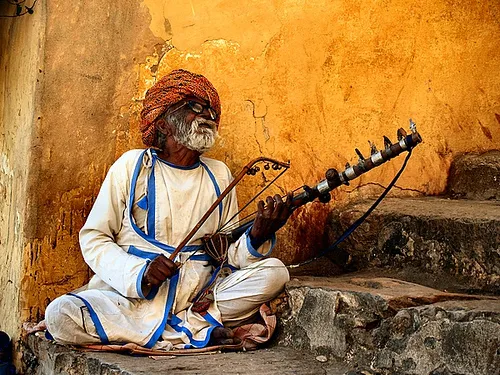
Indian ethnomusicology also explores musical instruments as cultural items.Major types of instruments include: String instruments- Examples of these include the sitar, sarod, sarangi, viṇa, tambura and various local instruments.
Wind instruments – These include the bansuri, shehnai, nagaswaram, several tribal flutes and other wind instruments.
Percussion instruments – These consist of the tabla, mridangam, pakhawaj, dhol, dholak, khol, ghatam, kanjira and many other regional drums.
Idiophones Objects like cymbals, bells, clappers and metal plates can also serve as musical instruments.An instrument is not simply a tool that makes sound.Its construction, the materials used, the makers, the players, its symbolic meaning, its status in society and the setting in which it is played can all carry cultural importance.
Dance & Theatre
In Indian performance traditions, music and dance are often closely linked.Classical dance forms such as Bharatanatyam, Kathak, Kathakali, Odissi, Manipuri, Kuchipudi, Mohiniyattam and Sattriya connect movement, rhythm, melody, poetry and performance in complex ways.Regional traditions also blend music with dance.Examples include: • Garba, • Bhangra, • Lavani, • Yakshagana, • Chhau, • Ghoomar, • Bihu performance, • Dandiya, • various tribal dances etc. Ethnomusicology studies how communities understand the relationship between musical rhythm, body movement and how they view the link between music and dance.
India has a rich tradition of musical theatre.Examples include: • Marathi SangeetNatak, • Bengali Jatra, • Assamese theatre, • Kannada Yakshagana,• Tamil musical theatre, • Nautanki, • Tamasha, • Bhavai, • Ramlila,• regional devotional theatre etc.
Theatre is especially important for ethnomusicology because it combines music, text, movement, costumes, social organization and audience interaction.
Music and the Indian Film Industry
Film music is one of the most influential forms of musical culture in modern India.Indian cinema has brought together classical music, folk traditions, devotional music, Western harmony, jazz, electronic music, regional styles, pop and global music.
Film songs have spread through: • cinema halls, • radio, • gramophone records, • cassette tapes, • television, • CDs, • streaming platforms, • social media etc.
Therefore, the study of Indian popular music must consider both the sound and the media technologies that carry it. Gregory D Booth and Bradley Shope’s edited volume “More Than Bollywood: Studies in Indian Popular Music” looks at Indian popular music from broader cultural viewpoints.It highlights that Indian popular music goes beyond Bollywood and includes diverse musical practices.
Indian Music and the West
The relationship between Indian and Western music has a long and complex history.Western scholars originally approached Indian music through comparative musicology and colonial records.Later, Indian music became influential among Western musicians and audiences.
Gerry Farrell’s “Indian Music and the West” explores the interaction between Indian music and Western musical culture.The book serves as an important resource for understanding how Indian music was represented, interpreted, performed and transformed in Western contexts.
The influence has not been one-way.Indian musicians have adopted Western instruments, recording technologies, harmonic ideas and performance formats while Western musicians have embraced Indian instruments, rhythmic concepts and improvisation styles.
Globalization and Diaspora
Indian music has spread widely through the movement of people and the growth of diaspora communities.Indian classical, devotional, folk-based, film and popular music can be found in communities across:• the United Kingdom,• the United States,• Canada,• South Africa, • Mauritius,• Fiji, • the Middle East, • Southeast Asia,• Australia,• Europe etc.
Musicians in diaspora often navigate between different cultural identities.A musician might learn Indian classical music from a teacher while performing for an audience that includes people from different backgrounds.A second-generation immigrant may blend Indian musical traditions with Western pop styles.Religious groups may keep devotional music alive as a way to hold onto their cultural heritage.Ethnomusicology offers valuable tools for understanding how cultures continue and change through music.
Technology and Digital Music
Technology has significantly impacted the way Indian music is created and shared.The invention of recording devices changed how musicians connect with their audiences.Gramophone records, radio, magnetic tape, cassettes, CDs, television and digital platforms all influenced how music is passed around.Digital technology has brought about even more changes.
Today, musicians can:• record performances at a lower cost,• share music online, • teach using video calls, • work with artists from other countries,• access old recordings, •reach people all over the world, • make electronic music arrangements, • release their own music without relying on traditional music industry structures.
This creates new chances for keeping music alive but it also brings up concerns about copyright, who owns the music, how it is used for profit and whether it respects the original culture.
Fieldwork in Indian Ethnomusicology
Fieldwork is one of the most important method.In this case, may spend weeks, months or even years building relationships with musicians and their communities.Fieldwork can include several activities such as:
Participant observation–The study takes part in musical and community activities while carefully watching how music is performed and how people interact.
Interviews – Talk to musicians, teachers, instrument makers, patrons, audience members and other community individuals to gather insights.
Audio recording – Performances are recorded for later study and documentation.
Video recording – Video recording allows for the study of gestures, movement, interaction, instruments, audience reactions and the performance environment.
Musical transcription – Some performances may be written down in detail for further study.
Archival research – Historical recordings, photos, manuscripts, newspapers and documents from institutions may be reviewed.
Ethnographic writing – It interprets music within the broader context of social and cultural settings. The methodological contributions remain significant because that highlight the value of combining fieldwork with analysis of both music and culture.
Research Ethics
Ethnomusicological research comes with ethical responsibilities. It deal with people’s cultural knowledge, performances, personal memories and artistic work. Therefore, it must pay attention to: • informed consent,• privacy,• intellectual property,• community ownership,• proper credit,• compensation, • permission for recording, • handling of sensitive cultural information, • responsible sharing of results etc.
A recording made during fieldwork does not only cultural knowledge but also Modern ethnomusicology is placing more emphasis with communities and other viewpoints.
Documentation and Archives
Documentation is necessary because many musical traditions are changing quickly.Archives can store: • audio recordings,• video recordings,• photographs,• manuscripts,• song lyrics, • musical instruments,• field notes, • interviews,• biographies,• catalogues etc.
Indian institutions have played a key role in safeguarding musical heritage.For instance, the Indira Gandhi National Centre for the Arts has published and preserved important materials related to Indian music and historical musicological texts (IGNCA).
However, preserving archives should also involve making the materials accessible to the communities.An archive that stores information without making it meaningful or usable to the original community may continue older patterns of unequal knowledge control.
Preservation of Folk and Traditional Music
One of the most commonly talked about subjects in Indian ethnomusicology is the preservation of traditional music. Factors such as urbanisation, migration, changing jobs, mass media, formal education, commercialisation and changes in the support given to musicians can change musical traditions.
Some traditions may fade away when younger people no longer learn them. Others may continue by adapting to new surroundings. For example, a traditional musician might take part in a village ceremony as well as perform on a concert stage. A folk singer might record a traditional song for a digital platform. A ritual song collection might be modified for tourist purposes. Such changes should not necessarily be seen as a loss. Ethnomusicology acknowledges that traditions are not static.
The key issue is not just whether a tradition stays the same but how it evolves, who has influence over these changes and what meanings are still important to those who practise it.
Museums, Cultural Institutions and Universities
Institutions play an important role in the growth of ethnomusicology in India. Universities offer courses and research opportunities. Cultural institutions support archives, publications, festivals, recordings and performances.
‘The Sangeet Natak Akademi’, ‘Indira Gandhi National Centre for the Arts’, universities, music colleges, museums, libraries and independent cultural groups have all helped in documenting and sharing Indian music. University curriculums show that ethnomusicology is being taught more often along with musicology, Indian classical music, folk music, research methods and cultural studies. For example, a current music syllabus at an Indian university includes works like Ranade’s Essays in Indian Ethnomusicology, S.A.K. Durga’s Ethnomusicology, and studies related to Northeast Indian folk culture and oral traditions. (Chandigarh University).
Ethnomusicology and Interdisciplinary Research
Ethnomusicology is naturally connected to many fields.To study a musical tradition, one may need to understand the following: • anthropology, •sociology, •history, •linguistics, •religious studies, •folklore, •dance, •theatre, •media studies, •gender studies, •cultural studies, •archaeology, •archival science, etc.
This broad approach is especially important in India.For instance, research on a devotional singing tradition might involve the study of religious beliefs, poetry, language, music performance, social structures, pilgrimage and historical background.
Similarly, research on a tribal festival might involve anthropology, folklore, ethnography, environmental studies, ritual practices and music analysis.
Major Scholars and Their Contributions
A number of scholars have played a key role in advancing the study of Indian music and ethnomusicology : Sudhibhushan Bhattacharya‘s book “Ethno-musicology and India” is a significant early work in the field of Indian ethnomusicology [1].It highlights the importance of systematically documenting folk and regional music.(Google Books)
Ashok D.Ranade linked ethnomusicology with Indology, history, cultural studies, theatre and Indian musicology [2, 3].His “Essays in Indian Ethnomusicology ” continues to be a key reference in the field.
- A.K.Durga played a vital role in shaping ethnomusicological scholarship and research methods in India.Her book ‘Ethnomusicology: A Study of Intercultural Musicology’ is an essential academic resource [4].
Komal Kothari‘s work on Rajasthan’s folk musicians and oral traditions had a major impact.His collaboration with Daniel Neuman and Shubha Chaudhuri resulted in detailed ethnographic documentation [5].
Shubha Chaudhuri has made substantial contributions to the documentation, archiving, ethnographic research and the study of Indian folk traditions[6].
Daniel M. Neuman‘s research has helped shape ethnographic approaches to Indian music, especially through in-depth studies of performers and musical communities [7].
Bonnie C.Wade‘s scholarly work introduced Indian classical music to ethnomusicological circles, with a focus on performance, musical structure and cultural context [9].
Martin Clayton‘s research has made notable contributions to the understanding of rhythm, time, performance, and North Indian classical music [10].
Gerry Farrell‘s work is crucial for understanding the connections between Indian music and Western musical traditions [11].
Conclusion
Ethnomusicology in India is a broad and continuously growing area of study. Its significance comes from the rich variety of musical practices found in India and from the understanding that music is deeply connected to the communities, historical contexts, beliefs, identities and social structures that support it.
The study of Indian music was once mainly focused on classical traditions and theoretical writings. While these remain important, ethnomusicology has broadened the field by bringing attention to various other forms such as folk, tribal, regional, devotional, theatrical, popular, film and diasporic music. This evolution has made the study of Indian music more comprehensive and inclusive.
The early contributions of Sudhibhushan Bhattacharya helped shape an ethnomusicological approach to Indian folk and traditional music. Ashok D. Ranade linked ethnomusicology with Indology, history, cultural studies, and Indian musicology; S.A.K. Durga focused on intercultural musicology. Scholars like Komal Kothari, Shubha Chaudhuri, Daniel Neuman, Martin Clayton, and Gerry Farrell expanded the field through their work on musical communities, classical traditions, performance, rhythm, cultural interactions and globalisation.
Indian ethnomusicology shows that musical traditions are not static. A tradition does not vanish just because its form changes. For example, a folk song can be recorded and released commercially, a classical musician can perform on an international stage, a ritual song can be documented digitally, a hereditary musician can become a university teacher and a regional tradition can become part of a global diaspora. These changes are key areas of interest in ethnomusicological research. Looking ahead, the future of ethnomusicology in India will involve digital archives, audiovisual recordings, community-based research, interdisciplinary studies, gender studies, migration studies, popular music, media studies and questions about cultural ownership.
The study deals with ethical concerns such as consent, copyright, commercialisation and the rights of communities to control how their musical heritage is represented.
Ultimately, ethnomusicology teaches us that music is more than just sound. It is memory, identity, history, ritual, emotion, labour, community, performance, technology and social relationships. In a country as culturally diverse as India, the study of music offers a powerful means of understanding the complexity of Indian society itself. The ongoing growth of ethnomusicological research is not only an academic advancement; it also plays a crucial role in documenting, interpreting, appreciating and responsibly preserving India’s remarkable musical heritage.
Bibliography
- Bhattacharya, Sudhibhushan. Ethno-musicology and India. Indian Publications, 1968.
- Ranade, Ashok D. Indology and Ethnomusicology: Contours of Early Indo-British Relationship. Promilla& Co., 1992.
- Ranade, Ashok D. Essays in Indian Ethnomusicology. Munshiram Manoharlal Publishers, 1998.
4.Durga, S. A. K. Ethnomusicology: A Study of Intercultural Musicology. B. R. Rhythms, 2004.
5.Neuman, Daniel M., Shubha Chaudhuri, and Komal Kothari. Bards, Ballads and Boundaries: An Ethnographic Atlas of Music Traditions in West Rajasthan. Seagull, 2005.
6.Clayton, Martin. Time in Indian Music: Rhythm, Metre, and Form in North Indian Rāg Performance. Oxford University Press, 2000.
7.Farrell, Gerry. Indian Music and the West. Clarendon Press, 1997.
8.Booth, Gregory D., and Bradley Shope, eds. More Than Bollywood: Studies in Indian Popular Music. Oxford University Press, 2013.
9.Bor, Joep, ed. The Raga Guide: A Survey of 74 Hindustani Ragas. Nimbus Records, 1999.
10.Nettl, Bruno. Theory and Method in Ethnomusicology. Free Press, 1964.
11.Bakhle, Janaki. Two Men and Music: Nationalism and the Making of an Indian Classical Tradition. Oxford University Press, 2005.
12.Danielou, Alain. Northern Indian Music. PUBLISHER Frederick A. Praeger, 1969.
13.Popley, Herbert A. The Music of India. Association Press, 1921.
14.Ray, Sukumar. Folk-Music of Eastern India: With Special Reference to Bengal. Indian Institute of Advanced Study, 1988.
15.Ghosh, Manomohan. The Naṭyasastra. Asiatic Society.