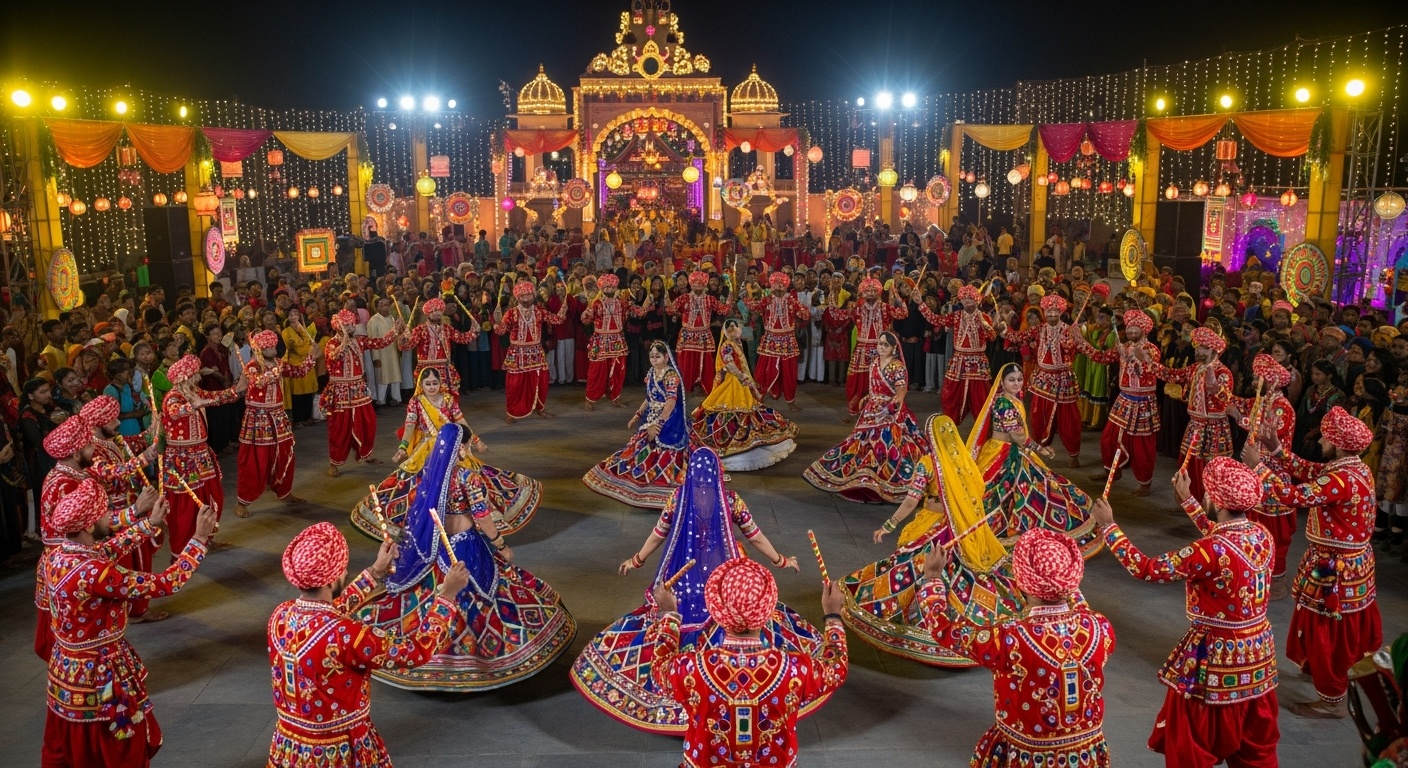
Negotiating Tradition and Modernity in Musicology and Performing Arts
Joysree Biswas, Ph.D. Scholar, is guided by Dr. Ami Pandya, Dept. of Dance, Faculty of Performing Arts, The Maharaja Sayajirao University of Baroda, Vadodara, Gujarat, India.
Abstract
This study explores navigating the intricate landscape of tradition and modernity in Indian musicology and performing arts requires a delicate balancing act between upholding rich cultural traditions and embracing the transformative power of contemporary influences. This process involves a dynamic interplay that not only highlights the deep-rooted connection between tradition and modernity but also underscores the significance of the Indian knowledge system and linguistic diversity in shaping musical expressions. By delving into the historical contexts spanning ancient civilizations and exploring the underlying philosophies that have guided musical practices over the centuries, especially through seminal texts like the “Natyashastra,” (Muni Bharat, Translated by Ghosh Manmohan,1950)[1] a comprehensive understanding of the evolution of Indian performing arts emerges. Furthermore, the pivotal roles played by various Indian languages—such as Sanskrit, Pali, Prakrit, and numerous regional dialects—in melding the diverse musical landscape are underscored, illuminating how these linguistic nuances have influenced the evolving nature of classical forms and folk traditions. Analysing the implications of contemporary education policies, such as the seminal “National Education Policy of 2020,” (Ministry of Human Resource Development, Government of India, n.d.)[2] on both the preservation and innovation of Indian arts underscores the critical role of arts education in nurturing and propagating cultural identity. Additionally, exploring interdisciplinary approaches that encompass music therapy and ethnomusicology, while also considering the impact of global dialogues on Indian performing arts, further showcases the resilience and adaptability of these art forms in a rapidly globalized world. Lastly, acknowledging and highlighting the invaluable contributions of women in the field reinforces the socio-
cultural fabric of “Indian musicology,” (NATIlAN, n.d.)[3] demonstrating its profound transformative potential within modern society.
Introduction
The intricate interplay between tradition and modernity has been a constant influence on the diverse landscape of artistic expression, particularly within the domains of musicology and performing arts. This dynamic relationship is especially pronounced in a country like India, which is renowned for its deep cultural heritage and vibrant linguistic tapestry. Here, the interaction between tradition and modern influences becomes even more intricate as it merges with the ancient systems of knowledge that underpin both the theoretical framework and practical facets of musical traditions. This essay contends that a comprehensive comprehension of the complex interconnections among musicology, performing arts, and the traditional Indian knowledge system is imperative for cultivating a well-rounded understanding of India’s rich artistic heritage. By delving into these relationships, it becomes evident that contemporary artistic practices are firmly rooted in age-old traditions while also evolving in response to the changing times. This symbiotic relationship between past and present not only preserves the essence of traditional art forms but also contributes to a dynamic dialogue that enriches the cultural legacy of India and presents a vibrant continuum of artistic expression across generations.
Key Aspects to Consider:
- Indian Knowledge System (IKS):
“The IKS” (Timane et al., 2024)[4] encompasses a vast array of traditional knowledge, including music, dance, theatre, literature, and philosophy. Integrating these traditional forms with modern practices can create a unique and enriched cultural expression.
- Languages of India: “India’s linguistic diversity” (Kulkarni-Joshi, 2019)[5] is immense, with hundreds of languages and dialects. Each language carries its own musical and performing arts traditions, which can be both preserved and innovated upon.
- Musicology and Performing Arts: These fields study and practice the art forms, exploring how traditional elements can be adapted to modern contexts. For example, “classical Indian music” (Ritual and Music in Hindu Tradition, Beck, Guy L. 2012)[6] and dance forms like Bharatanatyam and Kathak have evolved by incorporating contemporary themes and techniques while retaining their traditional essence.
- Cultural Identity and Modernity: Balancing tradition and modernity often involves negotiating “cultural identity.” (Ochilova, M. O. 2021. Concept of cultural identity and its role in intercultural communication )[7] This can mean reinterpreting traditional art forms to make them relevant to contemporary audiences without losing their core cultural significance.
- Educational Integration: “The National Education Policy (NEP) 2020” (Ministry of Human Resource Development, Government of India, n.d.)[8] in India emphasizes the integration of traditional Indian knowledge systems into modern education. This includes promoting traditional music and performing arts as part of the curriculum to foster a deeper understanding and appreciation of India’s cultural heritage.
- Musicology and Performing Arts in the History Literature and Archaeology of the Indian subcontinent.
The history of musicology and performing arts in the Indian subcontinent is deeply intertwined with its rich cultural heritage, literature, and archaeological findings. Here are some key points to consider:
Historical Context
- Indus Valley Civilization: Evidence of dance and music has been found in the archaeological sites of Harappa and Mohenjo-Daro, dating back to around 2500 BCE. A famous artifact is the “Dancing Girl”
The Dancing Girl of Mohenjo-Daro; 2500 BCE; bro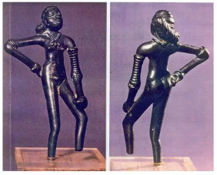 nze; height: 10.5 x 5 x 2.5 cm.; National Museum (New Delhi, India)(Dancing Girl Sculpture from Mohenjo Daro, Indus Valley Civilization, Bronze 2500 Bce, n.d.)[9]
statue, which suggests that dance was an integral part of the culture.
- Vedic Period: “The Rigveda,” (Complete Rig Veda in English (Sakala Shakha): Free Download, Borrow, and Streaming: Internet Archive, 2018)[10] one of the oldest sacred texts, contains references to music and dance, indicating their importance in religious and social life.
- Classical Sanskrit Theatre: “The Natyashastra” (Muni Bharat, Translated by Ghosh Manmohan,1950)[11], an ancient treatise on performing arts written by Bharata Muni, lays down the principles of drama, dance, and music that have influenced Indian performing arts for centuries.
Literary Contributions
- Natyashastra: This ancient text is a comprehensive guide on theatre, dance, and music, detailing various aspects such as gestures, expressions, and musical scales.
- Puranas and Epics: Texts like the “Mahabharata” (Mahabharata by Gita Press in Hindi and Sanskrit, 2021)[12] and “Ramayana” (The Ramayana of Valmiki, translated by Hari Prasad Shastri – 3 Volumes Combined – 1709 Pages, With Complete Outline: Hari Prasad Shastri ,2011)[13] also contain references to music and dance, showcasing their role in storytelling and cultural expression.
Archaeological Discoveries
- Musical Instruments: Archaeological excavations have unearthed various musical instruments, such as drums, flutes, and stringed instruments, which highlight the diversity and sophistication of ancient Indian music.
- Dance and Music Depictions: Sculptures and frescoes from ancient temples and caves depict dancers and musicians, providing visual evidence of the performing arts in historical contexts.
Cultural Impact
- Classical Dance Forms: Traditional dance forms like “Bharatanatyam,” (Chakraborty et al., 2021)[14], “Kathak,” (Kathak Nritya: Prakash Narayan, 1971)[15], Kuchipudi, and Odissi have evolved over centuries, incorporating both classical and folk elements.
- Folk Traditions: Folk music and dance forms, such as Bhangra, Garba, and Lavani, continue to be an essential part of regional cultures and celebrations.
Musicology and Performing Arts in Buddhist & Jain period.
The Buddhist and Jain periods were significant eras for the development of musicology and performing arts in the Indian subcontinent. Here’s a brief overview:
Buddhist Period
- Buddhist Rituals: Music and dance were integral to Buddhist rituals and ceremonies. Chanting and instrumental music were used to create a meditative atmosphere.
- Buddhist Orchestras: Buddhist monasteries often had orchestras that played during religious ceremonies. These orchestras included a variety of instruments such as drums, flutes, and stringed instruments.
- Visual Arts: Buddhist art often depicted musical scenes, showcasing the importance of music in daily and religious life.
Jain Period
- Jain Rituals: Similar to Buddhism, Jain rituals also incorporated music and dance. The performance of dances and dramas was common during festivals and religious ceremonies.
- Temple Performances: Jain temples had dedicated spaces for performing arts, including dance halls and stages for dramas.
- Devotional Music: Jain poets and musicians composed devotional songs and hymns, which were performed during religious ceremonies. These compositions often included references to ragas and were similar in style to other devotional music of the time.
Both periods saw a rich interplay between music, dance, and religious practices, contributing to the cultural and spiritual life of the communities.
Pali, Prakrit & Sanskrit Sources of Musicology and Performing Arts.
The sources of musicology and performing arts in Pali, Prakrit, and Sanskrit offer a rich tapestry of historical and cultural insights. Here’s a brief overview:
Pali Sources
- Tipitaka: The Pali Canon, also known as the “Tipitaka,” (Tipitaka English Translation from Myanmar Government (DPPS): Myanmar Government, 2021)[16] contains references to music and performing arts used in Buddhist rituals and ceremonies.
- Commentaries: Various commentaries on the Tipitaka also discuss the role of music in Buddhist practices.
Prakrit Sources
- Early Modern Literature: “Prakrit literature,” (History of Prakrit Literature: From 500 B.C. to 1800 a. D.: Jain, Jagadish Chandra,1961)[17] especially from the 15th to 17th centuries, reflects the interaction between literary and performing arts. This period saw innovations in sung genres like Prabodhan, gitam, Padam, and Krit.
- Dramatic Texts: Prakrit texts often depict music and dance, showcasing their importance in storytelling and cultural expression.
Sanskrit Sources
- Natyashastra: “Natyashastra,” (Muni Bharat: Translator: Manomohan Ghosh M.A., Ph.D. 1951)[18] this ancient treatise by Bharata Muni is a comprehensive guide on theatre, dance, and music, detailing various aspects such as gestures, expressions, and musical scales.
- Classical Literature: Sanskrit literature, including works by poets like Kalidasa, often incorporates music and dance, reflecting their significance in cultural and religious contexts like “Agnimitra, Kalidasa, Kavya, Kumara sambhavam, Malavika, Mallinatha, Medhadutam, Megha Sandesam, Raghuvamsam, Sakuntalam, Sanskrit Drama, Sanskrit ebook, sanskrit play, sanskrit poetry, Vikramorvasiyam,” (Walter Harding Maurer University of Hawaii at Manoe, 1901. KALIDASA, TRANSLARD FROM ORIGINAL SANSKRIT INTO ENGLISH, n.d.)[19]etc.
- Technical Treatises: There are numerous Sanskrit texts dedicated to musicology, such as “Sangitaratnakara by Sarngadeva,” (Sangitaratnakara of Sarngadeva Vol.1: Sastri, S. Subrahmanya, 1943)[20] which provide detailed information on musical theory and practice.
These sources collectively offer a deep understanding of the historical development and cultural significance of musicology and performing arts in the Indian subcontinent.
Indian Musicology and Performing Arts in Indian languages – Sanskrit, Pali, Prakrit, Hindi, Bengali, Assamese, Gujrati, Panjabi, Tamil, Telegu, Malayalam, and others.
Indian musicology and performing arts have a rich and diverse heritage, deeply rooted in various Indian languages. Each language brings its own unique Flavors and tradition to the cultural tapestry. Here’s an overview:
Sanskrit
- Natyashastra: This ancient treatise on performing arts covers dance, music, and drama. It is considered the foundation of classical Indian art forms.
- Sangitaratnakara: Written by Sarngadeva, this text is a comprehensive guide on musicology, detailing various musical scales and modes.
Pali
- Tipitaka: “The Pali Tipitaka” (Tipiṭaka in PDF, n.d.)[21] Canon references music and performing arts in the context of Buddhist rituals and ceremonies.
- Jataka Tales: These stories often include references to music and dance, highlighting their importance in cultural and religious life.
Prakrit
- Dramatic Texts: “Prakrit literature” (History of Prakrit Literature: From 500 B.C. to 1800 a. D. Jain, Jagadish Chandra, 1961)[22] often features music and dance, showcasing their role in storytelling and cultural expression.
Hindi
- Bhakti Movement: Hindi devotional songs and poetry, such as those by “Kabir”
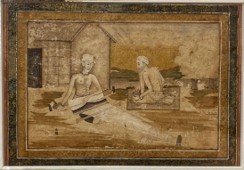
(Devotional Poet Kabir (Painting of Kabir Weaving, C. 1825), n.d.)[23]
- and Tulsidas, are integral to the Bhakti movement, combining music and spirituality.
- Bollywood: The Hindi film industry has played a significant role in popularizing various forms of music and dance.
Bengali
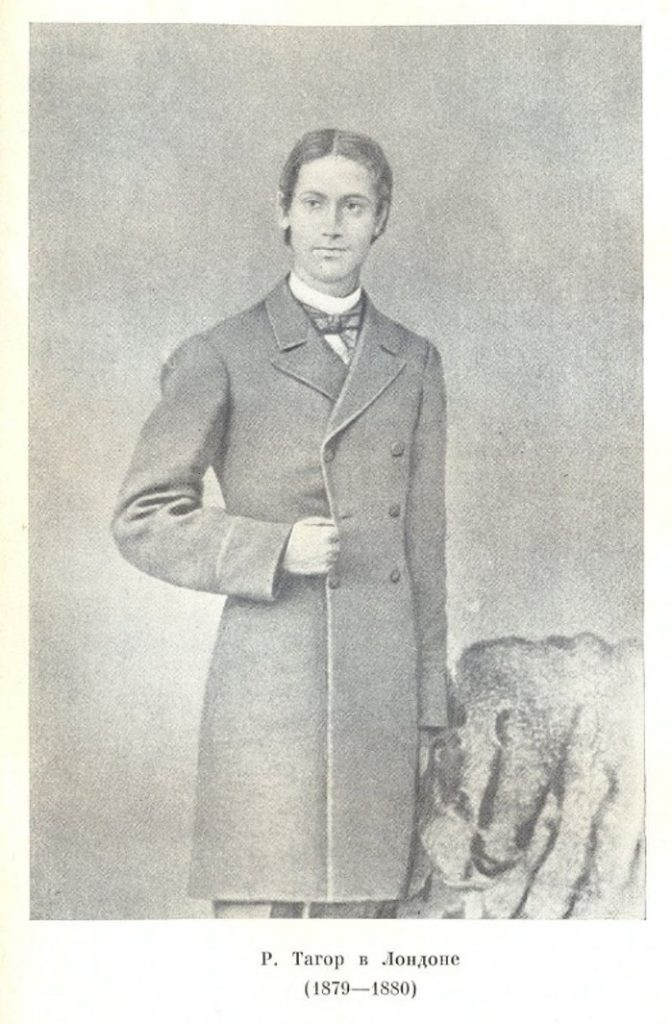
- Rabindra Sangeet: Songs written and composed by “Rabindranath Tagore,”
(Young Tagore in London, 1879, Rabindranath Tagore. Collected works / Ed. by IE. Bykova, A. Gnatyuk-Danilchuk, V. Novikova. — Moscow: State publishing house of fiction, File: Tagore in London 1879.jpg Created: 1879.) [24]
- blending classical and folk music traditions with modern themes.
- Baul Music: A unique folk music tradition characterized by simple lyrics and soulful melodies.
Assamese
- Bihu Dance: A traditional Assamese dance performed during the Bihu festival, accompanied by folk music.
- Satria Dance: A classical dance form that originated in the Vaishnavite monasteries of Assam.
Gujarati
- Garba: A traditional dance form performed during the Navratri festival, characterized by rhythmic movements and folk music.
- Bhavai: A traditional folk theatre form that includes music, dance, and drama.
Punjabi
- Bhangra: A lively and energetic dance form accompanied by traditional Punjabi music.
- Gurbani Kirtan: Sikh devotional music sung in Gurdwaras, often in Punjabi.
Tamil
- Carnatic Music: A classical music tradition with intricate compositions and devotional themes.
- Bharatanatyam: A classical dance form known for its grace and expressive storytelling.
Telugu
- Kuchipudi: A classical dance form from Andhra Pradesh, known for its intricate footwork and expressive gestures.
- Telugu Film Music: The Telugu film industry has a rich tradition of incorporating music and dance in its films.
Malayalam
- Kathakali: A classical dance-drama form known for its elaborate costumes and dramatic expressions.
- Sopanam Music: Traditional Kerala temple music with a distinctive style and rhythm.
Other Languages
- Kannada: Yakshagana, a traditional theatre form with music and dance.
- Marathi: Lavani, a folk-dance form known for its lively music and energetic movements.
- Odia: Odissi, a classical dance form with graceful movements and expressive storytelling.
This is just a glimpse into the diverse and vibrant world of Indian musicology and performing arts across various languages. Each language and region contribute uniquely to the rich cultural heritage of India.
Indian Musicology and Performing Arts in Iranian, Islamic, Arabic, and Persian sources.
“Indian musicology” (Sathyanarayana, R. INDIAN MUSICOLOGY, Research Methodology and Theory Construction, n.d.)[25] and “performing arts” (Mccarthy F. Kevin, Brooks Arthur, Lowell Julia, Zakaras Laura, Dilemma Economic, Baumol J. William, Bowen G. William, Performing Arts, n.d.)[26] have a rich history and have been documented in various Iranian, Islamic, Arabic, and Persian sources. Here are some insights:
Iranian Sources
Iranian music shares similarities with Indian music, especially in terms of improvisation. Both traditions emphasize the performer’s contribution to the music, with elements like ornamentation and variations added during performances. The “sitar and classical instruments” (Williams & University of Washington, 2022)[27]in both India and Iran, have a common ancestry.
Islamic Sources
“Islamic musicology” (Harith, N. S. H., Shanmugavelu, N. G., & Bahar, N. H. A. (2020). MUSICOLOGY IN ISLAM: a PRELIMINARY STUDY.)[28] has a deep connection with Indian music, particularly in the context of religious and devotional music. The concept of music in Islam is often associated with spiritual and devotional practices, and there are references to Indian music in Islamic texts. For example, the Chishti Sufi tradition in South Asia incorporates Indian raga music into its devotional practices.
Arabic Sources
Arabic sources also document the influence of Indian music, especially in the context of religious and cultural exchanges. The Arabic term “ghina” is used for music in secular contexts, while “taghbir” refers to vocal adornment of religious texts. Indian music has influenced Arabic music, particularly in regions with significant Indian diaspora.
Persian Sources
Persian sources highlight the Indo-Persian musical confluence, showcasing the shared musical heritage between India and Iran. The “Persian word, setar”
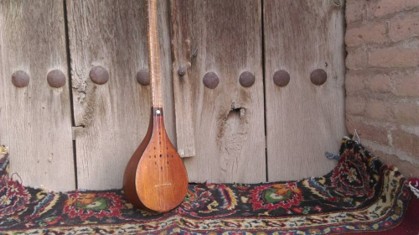
(Persian Setar: History and Musical Heritage)[29]
is similar to the Indian sitar, and both instruments have a shared history. Persian scholars and musicians have documented the influence of Indian music on Persian musical traditions.
Indian Musicology, Performing Arts and Education.
The integration of Indian musicology and performing arts into education has profound implications for cultural preservation, holistic development, and fostering creativity. Here’s a look at how these elements is intertwined:
Curriculum Integration
- Classical Music and Dance: Schools and universities offer programs in classical music (both Hindustani and Carnatic) and classical dance forms like “Bharatanatyam,” (Shetti, N., Eldridge, Masodkar, & Meduri, A. 2021)[30], “Kathak,” (Skiba Katarzyna, 2016)[31] “Odissi,” (Pattnaik, n.d.)[32] and others.
- Folk and Contemporary Arts: There is also a growing emphasis on folk traditions and contemporary performing arts, ensuring a well-rounded education.
Pedagogical Approaches
- Practical Training: Emphasis on hands-on training, performances, and workshops to provide real-world experience.
- Theoretical Studies: Courses cover music theory, history, and musicology, ensuring a deep understanding of the cultural and technical aspects of the arts.
Educational Frameworks
- Traditional Gurukul System: Historically, music and performing arts were taught through the Gurukul system, where students lived with their teachers (gurus) and learned through direct transmission of knowledge and practice.
- Modern Institutions: Today, numerous institutions offer formal education in music and performing arts. Renowned institutions include the “National School of Drama (NSD),”
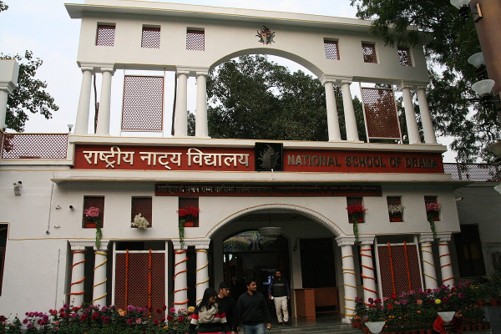
(Sen, R. 2023, May 12) [33] National School of Drama, New Delhi
Sangeet Natak Academy, and various universities and conservatories.
Cultural Preservation and Innovation
- Preservation of Heritage: Education in traditional music and performing arts helps preserve cultural heritage and pass it on to future generations.
- Innovation: Exposure to different art forms and contemporary practices encourages innovation and the blending of traditional and modern elements.
Benefits of Arts Education
- Cognitive and Emotional Development: Engaging with music and performing arts enhances cognitive abilities, emotional expression, and empathy.
- Creativity and Problem-Solving: Arts education fosters creativity, critical thinking, and problem-solving skills.
- Cultural Awareness: Students develop a deeper appreciation for cultural diversity and heritage.
Policies and Initiatives
- National Education Policy (NEP) 2020: “The NEP 2020” (Ministry of Human Resource Development, Government of India, n.d.)[34] emphasizes the integration of arts education, including music and performing arts, into the curriculum at all levels of education.
- Government and NGO Programs: Various government and non-governmental organizations support programs and initiatives to promote arts education.
Global Influence
- International Collaborations: Indian institutions often collaborate with international organizations and universities to promote cultural exchange and global understanding of Indian arts.
- Cultural Diplomacy: Indian music and performing arts serve as powerful tools for “cultural diplomacy,” (Isar Raj Yudhishthir, 2017)[35] showcasing India’s rich heritage on the global stage.
The incorporation of musicology and performing arts into education not only preserves and promotes Indian cultural heritage but also contributes to the holistic development of individuals and society.
Interdisciplinary Approaches of Musicology and Performing Arts.
Exploring interdisciplinary approaches in musicology and performing arts can yield fascinating insights and innovations by combining different fields of study and practice. Here are some notable interdisciplinary approaches:
Ethnomusicology and Anthropology
- Cultural Context: Understanding music and performing arts within their cultural contexts, studying how they reflect and influence social structures, rituals, and daily life.
- Fieldwork: Conducting ethnographic fieldwork to collect data on musical practices and performances, often involving participant observation and interviews.
- Music Therapy and Psychology
- Therapeutic Applications: Using music and performance as therapeutic tools to address psychological, emotional, and physical health issues.
- Research: Investigating the impact of music on the brain, emotions, and behaviour through psychological studies and clinical trials.
Music Technology and Engineering
- Sound Engineering: Developing and using technology to create, record, and manipulate sound in innovative ways.
- Digital Humanities: Applying computational methods to analyse and interpret musical data, such as using algorithms to identify patterns in compositions.
- Music Education and Pedagogy
- Teaching Methods: Exploring various approaches to teaching “music and performing arts,” (Indian Culture and Heritage Secondary Course. n.d.). [36] incorporating traditional and modern techniques.
- Curriculum Development: Designing curricula that integrate music and performing arts with other subjects, fostering a holistic educational experience.
Musicology and Linguistics
- Phonetics and Phonology: Studying the sounds of music and speech, examining how they are produced and perceived.
- Language and Lyrics: Analysing the relationship between language and music, including the role of lyrics in songs and the linguistic aspects of vocal performance.
Performance Studies and Theatre
- Theatrical Techniques: Examining how theatrical methods can enhance musical performances and vice versa.
- Interdisciplinary Performances: Creating performances that blend music, dance, drama, and other art forms to explore new artistic expressions.
- Musicology and History
- Historical Musicology: Studying the history of music and its development over time, including the influence of historical events and cultural movements.
- Archival Research: Investigating historical documents, recordings, and artifacts to uncover the evolution of musical practices and performances.
- Music and Cultural Studies
- Identity and Representation: Exploring how music and performing arts shape and reflect “cultural identities and social issues.” (Chen Yea-Wen and Lin Hengjun, 2016)[37]
- Popular Culture: Analysing the role of music and performance in popular culture, including its impact on fashion, media, and societal norms.
- Music and Neuroscience
- Cognitive Processes: Investigating how the brain processes music, including aspects like perception, memory, and emotion.
- Neurasthenics: Studying the neural mechanisms underlying the appreciation and creation of music and performing arts.
These interdisciplinary approaches not only enrich our understanding of “musicology” (Lawergren B., Neubauer E. and Kadyrov M. H., n.d.) [38] and performing arts but also open up new avenues for research, education, and creative expression.
Therapeutic Aspects of Performing Arts and Inclusive Education India.
The therapeutic aspects of performing arts in India, especially in the context of inclusive education, are quite fascinating! Performing arts, such as music, dance, and drama, have been used as therapeutic tools to support cognitive, emotional, and social development.
For instance, a study conducted at Sangbedan, a social welfare organization in Kolkata, highlighted how engagement in performing arts significantly benefited disabled students. These students experienced improvements in self-esteem, emotional expression, communication skills, and cognitive abilities. The arts provided them with a platform for expression and development, fostering a sense of community and belonging.
Additionally, the concept of Raag Chikitsa “(music therapy)” (Defining Music Therapy (Third Edition): Kenneth E. Bruscia, 2014)[39] in Indian culture uses classical ragas to treat various psychological and physical ailments, such as insomnia, anxiety, and hypertension. This traditional approach to music therapy has shown promising results in promoting overall well-being and healing.
Inclusive education programs in India are increasingly integrating performing arts to create a more holistic learning environment for students with disabilities. These programs aim to empower students by providing them with opportunities to explore their creative potential and enhance their overall quality of life.
Indian Musicology and Linguistics:
Indian musicology and linguistics are both rich fields with deep historical roots and contemporary relevance.
Indian Musicology
Indian musicology encompasses the study of traditional and classical music systems, such as “Carnatic music” (Saint Thyagaraja et al., n.d.) [40] and “Hindustani music.” (Hindustani-sangeet-paddhati-kramik-pustak-malika-part-1, 2020)[41] It involves research into music theory, composition, performance practices, and the cultural contexts of music2. Institutions like the Sangeet Natak academy play a crucial role in preserving and promoting Indian musicology.
Indian Linguistics-
India is a linguistically diverse country with 121 languages and 270 mother tongues. The study of Indian linguistics involves analysing the structure, history, and evolution of these languages. The “Central Institute of Indian Languages (CIIL)” (Central Institute of Indian Languages & Ministry of Education, Government of India, n.d.)[42] is dedicated to promoting the scientific study of Indian languages and fostering emotional integration through language.
Indian Musicology and Philosophy
Indian musicology and philosophy are deeply intertwined, reflecting a rich tradition that dates back thousands of years. Here are some key points:
Philosophical Foundations
Indian classical music is rooted in the concept of “Nada Brahma,” (The World Is Sound: Nada Brahma: Music and the Landscape of Consciousness: Berendt, Joachim Ernst, 1991)[43] which means “sound is divine”. This philosophy suggests that music is a manifestation of the divine and has the power to elevate the soul1. The “Samaveda,” (Sama Veda in English: Dr Tulsiram MA, 2022)[44] one of the four Vedas, is chanted in a musical pattern, emphasizing the spiritual nature of music.
Aesthetic Appeal
The aesthetic appeal of Indian music is often interpreted through the lens of “Raga and Rasa.” (McNeil, 2015)[45] A Raga is a melodic framework for improvisation, while Rasa refers to the emotional essence or mood evoked by the music. This connection between music and emotion is central to the philosophy of Indian music.
Spiritual Journey
Indian classical music is seen as a journey of the individual soul (jeevatma) towards the divine (paramatma). Musicians aim to cultivate an attitude of selflessness and unity with the supreme reality, Brahman.
Influence of Philosophers
Philosophers like Rabindranath Tagore have also contributed to the evolution of Indian musicology by challenging traditional systems and introducing new perspectives.
- Indian Musicology and Social Studies.
Indian musicology and social studies are deeply interconnected, reflecting the diverse cultural and social fabric of the country. Here are some key points:
Ethnomusicology
“Ethnomusicology” (Jairazbhoy, N. A. n.d.) [46] is the study of music in its cultural context. In India, this involves exploring the music traditions of various communities, including folk, tribal, and classical forms. Ethnomusicologists examine how music functions within society, its role in rituals, and its impact on social identity.
Social Functions of Music
Music in India serves various social functions, from religious ceremonies to community celebrations. For example,
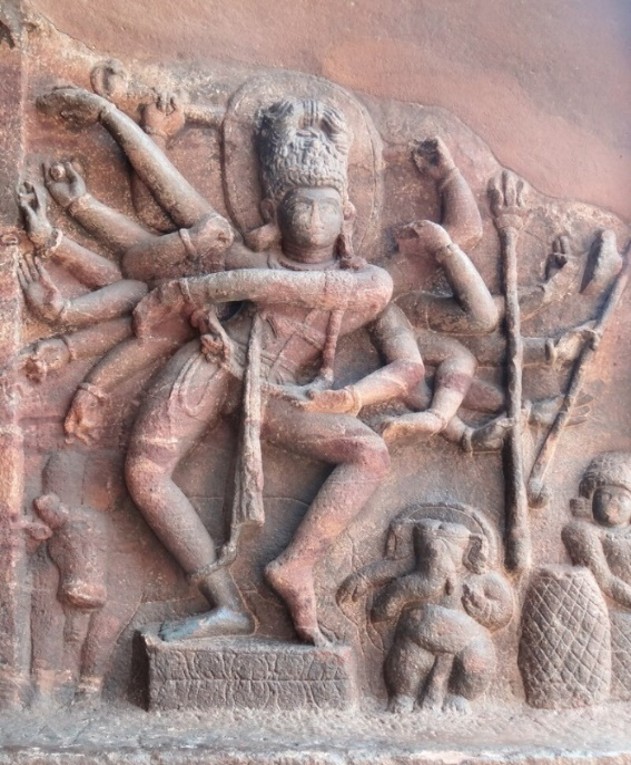
“Bharatanatyam”[47] A 7th century Shiva on Bharatnatyam pose in Badami cave temples, Karnataka, Cave-
Birju Maharaj | Biography, Dance, Legacy, Facts, Choreographies, & Awards | Britannica
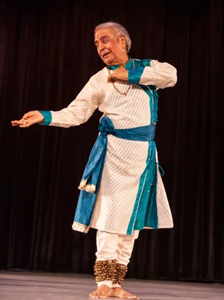
https://www.britannica.com/biography/Birju-Maharaj 29/01/2025,14:31
and “Kathak” (The Editors of Encyclopaedia Britannica, 2025)[48] dance forms are not just artistic expressions but also convey cultural narratives and social values.
Intercultural Perspectives
“The study of Indian music” (Densmore, 1915)[49] from a social and intercultural perspective highlights the influence of historical and contemporary cultural exchanges. The Indo-British interrelationship, for instance, paved the way for intercultural communication through musical works.
Diversity and Fragmentation
India’s music reflects its diversity and fragmentation in terms of race, religion, language, and other cultural aspects. This diversity is a direct manifestation of the country’s complex social structure.
Traditional Knowledge and the Concept of Sustainability in Musicology and Performing Arts.
The intersection of traditional knowledge and sustainability in “musicology” (Hooper &
University of Liverpool, 2006)[50] and “performing arts” (Bhaskar, B. 2023, February 20)[51] is a fascinating area of study. Here are some key points:
Traditional Knowledge in Musicology
Traditional knowledge encompasses the practices, skills, and cultural expressions passed down through generations. In musicology, this includes “indigenous music” (Mataira et al., 2000)[52] traditions, folk songs, and classical compositions that have been preserved over centuries1. These musical forms are not just artistic expressions but also carry cultural, spiritual, and historical significance.
Sustainability in Performing Arts
Adopting methods that reduce environmental effect and encourage cultural preservation is what is meant by “sustainability in the performing arts.” (FitzGibbon et al., 2023)[53] This can involve lowering theatre energy usage, encouraging environmentally friendly transportation for performers and spectators, and utilizing eco-friendly materials for sets and costumes. Furthermore, including environmental conservation topics in performances can increase awareness and motivate people to take action.
Integrating Traditional Knowledge and Sustainability
A potent synergy can be produced by fusing ecological methods with traditional wisdom. Using traditional instruments made of natural materials and encouraging their conservation, for instance, can help protect the environment and cultural heritage. Additionally, audiences might learn about sustainable living practices by infusing traditional ecological knowledge into performances.
Ethnomusicology in India.
“In India, ethnomusicology” (Jairazbhoy (n.d.)[54] is a thriving field that investigates the various musical customs and practices that exist throughout the nation. Here are a few crucial elements.
Definition and Scope
The study of music within its cultural setting is known as ethnomusicology. In India, this entails studying the folk, tribal, classical, and modern musical traditions of diverse populations. The function of music in society, its significance in rituals, and its influence on social identity are all studied by ethnomusicologists.
Key Institutions
One of the leading organizations in this area is the “Archives and Research Canter for Ethnomusicology (ARCE),” (Archives and Research Center for Ethnomusicology – American Institute of Indian Studies, 2020)[55] which is connected to the American Institute of Indian Studies. In addition to supporting research, preservation, and the sharing of these cultural objects, ARCE is home to vast collections of recordings of “Indian music and oral traditions.” (Pande, 2019)[56]
Research and Fieldwork
In India, ethnomusicologists document and analyse many musical traditions through fieldwork. This entails interviewing performers, documenting live performances, and researching the social and cultural backgrounds of music. In an effort to save endangered musical traditions for future generations, projects frequently canter on them.
Cultural Significance: Indian music is intricately linked to social and cultural customs. Understanding the cultural value of music, its function in communal life, and its contribution to cultural legacy is made easier with the aid of ethnomusicology.
Traces of Indian Musicology in Mathematics & Technical Sciences.
“There is an intriguing relationship between Indian musicology and technical disciplines and mathematics.” (Shah & Shah, 2010)[57] Here are some important points:
Historical Texts
Mathematical ideas can be found in Indian musical treatises as the “Natyashastra (2nd century BCE),” (Natya Shastra: Bharat Muni: 2012)[58] “Brihaddeshi (9th century),” (BRIHADHESI OF MATHANGAMUNI: Dr Suvarna Nalapat Trust: Internet Archive, 2008)[59] “Sangeet Damodar (14th century),” (Sangita Darpana of Damodara TMSSML 1952 0101: Catura Damodara, 1952b)[60] and “Sangeet Parijat (17th century).” (Sangeet Parijat: Mitra, Shachindranath Tr., 1965)[61] The mathematical connections between musical notes, scales, and rhythms are covered in these publications.
Mathematical Patterns
Mathematical patterns are the foundation of Indian classical music. The raga system, for instance, has particular scales and intervals that can be explained by mathematical ratios. In order to produce intricate rhythmic cycles, the tala system, which controls rhythm, also uses mathematical concepts.
Instrument Design: To get the appropriate pitch and tonal quality, classic Indian musical instruments like the sitar and veena require intricate mathematical calculations during design and manufacturing. For example, mathematical formulas are used to determine the length and tension of strings.
Modern Applications: The mathematical elements of Indian music are still being studied by scholars today. Research has demonstrated that group theory, symmetry, and transformations all of which are basic ideas in mathematics can be used to analyse Indian classical music.
Indian women in musicology and the performing arts.
Women have made significant contributions to musicology and the performing arts in India, often defying traditional norms and preconceptions. Here are few examples that stand out:
Pioneers of Indian classical music
“MS. Subbulakshmi, known as the Voice of Carnatic Music,” (Wikipedia contributors, n.d.)[62]
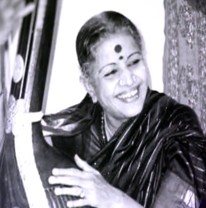
Madurai Shanmukhavadivu Subbulakshmi
was the first Indian singer to address the UN General Assembly. Her performances deeply moved the audience.
Begum Akhtar:
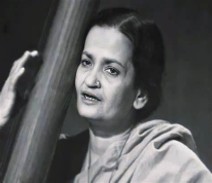
An early portrait of Begum Akhtar, the malika or queen of ghazals, is shown here.
“Begum Akhtar” (Desi News, 2021) [63] Known as the “Ghazal Queen” of Hindustani classical music, she breathed fresh life into ghazals with her passionate renditions.
Kesarbai Kerkar: “Kesarbai Kerkar” (Wikipedia contributors. Kesarbai Kerkar, a pioneer of the Jaipur-Aratula gharana, was notable for her unique approaches to melody and extraordinary talent in her raga performances.
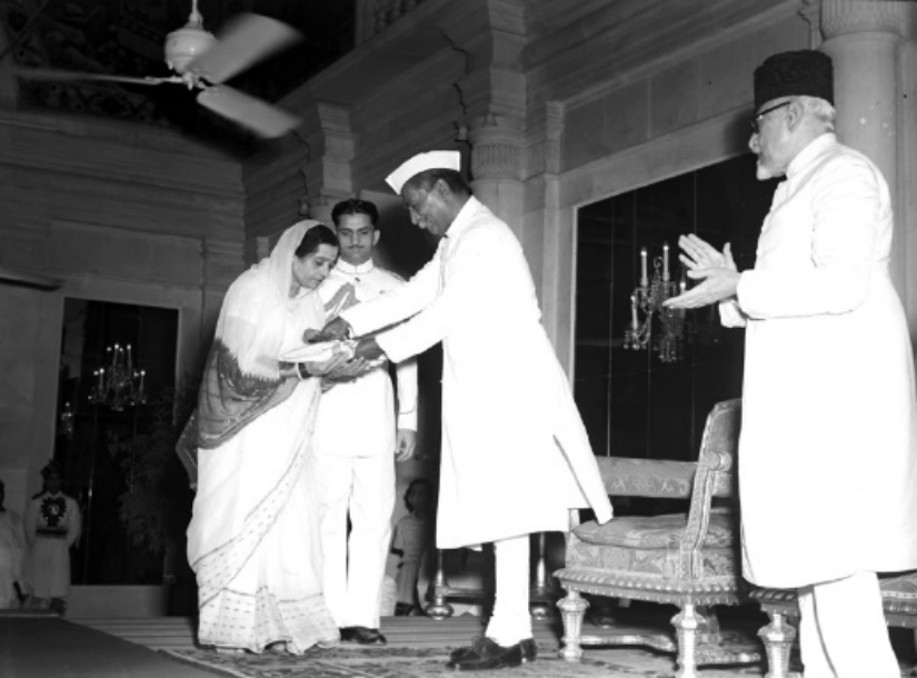
Caption: – Studio/Mar. 53, A22d(v) Shrimati Kesarbai Kerkar, Vocalist, Hindustani School of
Music, receiving the annual award of a purse, shawl and a sanad from the president, Dr Rajendra Prasad, at a ceremony held at Rashtrapati Bhavan, New Delhi, on March 14, 1953. Photo Number: -32306
Feminism in North-East Indian Music
Studies have examined how women function in North-East Indian music, with particular attention to areas like Assam, Sikkim, and Meghalaya. This study demonstrates how music may be used to question and change how society views gender roles
Gender Roles in Culture and the Arts
To advance gender equality and empower women in the arts and cultural sector, the British Council has also concentrated on gender dynamics in India.
Asian Studies and Indian Musicology:
Asian studies (Luo et al., 2021) [65] and Indian musicology are related disciplines that provide profound understanding of the historical and cultural backgrounds of music throughout Asia. Here are some important points:
Multidisciplinary Method
Indian musicology frequently takes an interdisciplinary approach, combining ideas from several disciplines, including philosophy, mathematics, acoustics, and psychology. This all-encompassing viewpoint makes it easier to understand the complexity of Indian music and its cultural relevance.
Studies of Comparison
Asian studies enable comparative research on the musical traditions of various Asian cultures. Scholars can gain a better grasp of regional influences and cross-cultural interactions by comparing Indian music with other Asian music traditions.
The study of ethnomusicology
Investigating the musical traditions of many Asian communities requires an understanding of ethnomusicology. The preservation and promotion of Indian and other Asian music and oral traditions are the goals of organisations such as the “Archives and Research Center for Ethnomusicology (ARCE) in India”. (Archives and Research Center for Ethnomusicology – American Institute of Indian Studies, 2020b) [66]
Exchange of Cultures
The historical and current cultural contacts between India and other Asian nations are highlighted by the study of Indian musicology within the larger framework of Asian studies. These interactions have enhanced the region’s musical landscape and helped create distinctive musical styles.
India’s new educational policy, performing arts, and musicology are all interconnected.
It is intriguing to investigate the relationship between Indian musicology, performing arts, and the country’s “New Education Policy (NEP).” (Ministry of Human Resource
Development, Government of India, n.d.) [67] Here is a quick synopsis:
Indian Musicology and Performing Arts
Indian musicology encompasses the study of music traditions, theory, history, and cultural contexts within India. It includes classical music (both Hindustani and Carnatic), folk music, devotional music, and contemporary genres. In India, the performing arts—dance, theatre, and puppetry—intertwine deeply with music, creating a rich cultural tapestry.
The New Education Policy (NEP) 2020:
The NEP 2020 aims to overhaul India’s education system, making it more holistic, flexible, and aligned with 21st-century skills. Key aspects include:
Multidisciplinary Education: “Multidisciplinary Education” (Bashir Latifa, Wani Dr. Gulshan,Multidisciplinary and Holistic Education: Achieving Academic Excellence and Bolstering All-Round Development in the 21st Century with NEP- 2020) [68] encouraging students to explore subjects across streams, breaking traditional barriers between arts, sciences, and vocational training.
- Skill Development: Emphasizing vocational training and skill development from an early stage.
- Holistic Development: Focusing on the overall development of students, including creativity, critical thinking, and social skills.
- Language and Culture: Promoting Indian languages, arts, and culture, ensuring that students learn at least three languages, including two natives to India.
Impact on Musicology and Performing Arts
The NEP’s emphasis on arts and culture provides a significant boost to Indian musicology and performing arts. By integrating these subjects into the curriculum, students gain a deeper appreciation and understanding of their cultural heritage. This holistic approach also encourages interdisciplinary studies, allowing students to explore the connections between music, dance, theatre, and other art forms.
Musicology and Performing Arts & Indian Aesthetics.
Indian musicology and performing arts are deeply intertwined with Indian aesthetics, which is a branch of philosophy that deals with the nature of art, beauty, and taste. Here are some key points:
Indian Aesthetics
Indian aesthetics is rooted in ancient texts like the Natyashastra by Bharata Muni, which outlines the principles of drama, dance, and music. The concept of “Rasa (emotional essence)” (BHARATA MUNI’S CONCEPT OF RASA, – P.G.Dr. Shridevi, Vol. VI, Issue II, February 2020)[69] and Bhava (mood) are central to Indian aesthetics. These principles guide artists in evoking specific emotions and moods through their performances.
Musicology and Performing Arts
Indian musicology involves the study of traditional and classical music systems, such as “Carnatic music” (Carnatic Music NATIONAL INSTITUTE OF OPEN SCHOOLING ISO9001:2000 Certified (an Autonomous Organisation Under MHRD, Govt. Of India)[70] and “Hindustani music.” (Hindustani Music NATIONAL INSTITUTE OF OPEN SCHOOLING ISO9001:2000 Certified, an autonomous organisation under MHRD, Govt. of India)[71] “Performing arts,” (Ministry of Culture, Government of India. n.d. Indian Performing Arts) [72] including dance and drama, are closely linked to music, creating a holistic cultural experience.
Relationship Between Musicology and Aesthetics
The relationship between musicology and aesthetics in India is profound. Music is seen as a medium to express and evoke emotions, aligning with the aesthetic principles of Rasa and Bhava1. Artists use tonal sounds and sequences to manifest their inner emotions and connect with the audience on a deeper level.
Contemporary Relevance
In contemporary times, the principles of Indian aesthetics continue to influence modern music and performing arts. Artists and scholars explore these traditional concepts to create innovative and culturally rich performances.
References
Bibliography
Natya Shastra: Muni Bharat: Translator: Manomohan Ghosh M.A., Ph.D.
- Published by: Asiatic Society of Bengal, Calcutta, Year of Publishing: 1951 Free download, Borrow, and streaming: Internet Archive. (2012b, January 10). Internet Archive. https://archive.org/details/NatyaShastra/natya_shastra_translation_volume_1_-_bharat_muni/
- Ministry of Human Resource Development, Government of India. (n.d.). National Education Policy 2020. https://www.education.gov.in/sites/upload_files/mhrd/files/NEP_Final_English_0.pdf. PP-3
- NATIlAN, N. R. (n.d.). Musicology in India. https://ia903403.us.archive.org/1/items/dli.ministry.17573/JSNA%2528110%252931-41.pdf.pdf
- Timane, Dr. R., Wandhe, Dr. P., Indian Knowledge System, & Dr. Panjabrao Deshmukh Institute of Management Technology and Research, Dhanwate National College, Nagpur. (2024). Indian Knowledge System. In Journal of Emerging Technologies and Innovative Research (Vol. 11, Issue 2). https://www.jetir.org/papers/JETIR2402475.pdf
- Kulkarni-Joshi, S. (2019). Linguistic history and language diversity in India: Views and counterviews. Journal of Biosciences, 44(3). https://doi.org/10.1007/s12038-019-9879-1
- Beck, Guy L. (2012). Sonic Liturgy: Ritual and Music in Hindu Tradition. Columbia: University of South Carolina Press. ISBN 978-1-61117-108-2.
- Ochilova, M. O. (2021). Concept of cultural identity and its role in intercultural communication. Asian Journal of Research in Social Sciences and Humanities, 11(11), 689–695. https://doi.org/10.5958/2249-7315.2021.00299.9
- Ministry of Human Resource Development, Government of India. (n.d.). National Education Policy 2020. https://www.education.gov.in/sites/upload_files/mhrd/files/NEP_Final_English_0.pdf. PP-3
- National Museum, New Delhi. (n.d.). https://nationalmuseumindia.gov.in/en/collections/index/6
- Complete Rig Veda in English (Sakala Shakha): free download, borrow, and streaming: Internet Archive. (2018, January 4). Internet Archive. https://archive.org/details/rigvedacomplete
- Natya Shastra: Muni Bharat: Translator: Manomohan Ghosh M.A., Ph.D.
Published by: Asiatic Society of Bengal, Calcutta, Year of Publishing: 1951 Free download, Borrow, and streaming: Internet Archive. (2012b, January 10). Internet Archive. https://archive.org/details/NatyaShastra/natya_shastra_translation_volume_1_-_bharat_muni/ - Mahabharata by Gita Press in Hindi and sanskrit : Free Download, Borrow, and Streaming : Internet Archive. (2021, September 6). Internet Archive. https://archive.org/details/mahabharata-by-gita-press-in-hindi-and-sanskrit/Mahabharata%20Volume%201/
- The Ramayana of Valmiki, translated by Hari Prasad Shastri – 3 Volumes Combined – 1709 Pages, with complete Outline: Hari Prasad Shastri: Free Download, Borrow, and Streaming: Internet Archive. (2011, July 30). Internet Archive. https://archive.org/details/The.Ramayana.of.Valmiki.by.Hari.Prasad.Shastri
- Chakraborty, A., Moin, S. W., Dey, A., & Bose, A. (2021). DANCE (BHARATANATYAM): THE ART OF NON VERBALCOMMUNICATION. In International Journal of English Learning and Teaching Skills: Vol. Vol. 1 (Issue No. 3, pp. 251–253) [Journal-article]. https://www.ijeltsjournal.org/wp-content/uploads/2020/01/38.DANCE-BHARATANATYAM.pdf
- Kathak Nritya: Prakash Narayan: Free download, Borrow, and streaming: Internet Archive. (1971). Internet Archive. https://archive.org/details/in.ernet.dli.2015.483946/page/n7/mode/2up
- Tipitaka English Translation from Myanmar Government (DPPS): Myanmar Government: Free Download, Borrow, and Streaming: Internet Archive. (2021, April 25). Internet Archive. https://archive.org/details/TipitakaEnglishTranslationFromMyanmar/Tipitaka%20English%20Translation%20from%20Myanmar%20Government%20%28DPPS%29/01%20Digha%20Nikaya%201.%20Silakkhandhavagga%20%28tr.%20U%20Htin%20Fatt%2C%20by%20DPPS%29%20OCRed/
- History of Prakrit Literature: From 500 B.C. to 1800 A. D.: Jain, Jagadish Chandra: Free download, borrow, and streaming: Internet Archive. (1961). Internet Archive. https://archive.org/details/in.ernet.dli.2015.552436
- Natya Shastra: Muni Bharat: Translator: Manomohan Ghosh M.A., Ph.D.
Published by: Asiatic Society of Bengal, Calcutta, Year of Publishing: 1951 Free download, Borrow, and streaming: Internet Archive. (2012b, January 10). Internet Archive. https://archive.org/details/NatyaShastra/natya_shastra_translation_volume_1_-_bharat_muni/ - Walter Harding Maurer University of Hawaii at Manoe. (1901). KALIDASA (TRANSLARD FROM ORIGINAL SANSKRIT INTO ENGLISH.] 1. Shakuntala, 2. Vikrama-Urvashi, 3. Kumara-Sambhavam, 4. Megha-Duta, 5. Ritu-Samhara, 6. Raghu-Vamsha. PUBLISHED AT THE SOCIETY FOR THE RESUSCITATION OF INDIAN LITERATURE. Jo, Nayon Chand Dutt’s Street, Calcutta. https://ia800302.us.archive.org/20/items/Works_of_Kalidasa_English_Translation_William_Jones/Works%20of%20Kalidasa%20%28English%20Translation%29%20-%20William%20Jones%201901%20%28HC%20Dass%2C%20Calcutta%29.pdf
- Sangitaratnakara of Sarngadeva Vol.1: Sastri, S. Subrahmanya: Free download, borrow, and streaming: Internet Archive. (1943). Internet Archive. https://archive.org/details/in.gov.ignca.35967
- Tipiṭaka in PDF. (n.d.). https://tipitaka.org/romn.html
- History of Prakrit Literature: From 500 B.C. to 1800 A. D. : Jain, Jagadish Chandra : Free download, borrow, and streaming : Internet Archive. (1961). Internet Archive. https://archive.org/details/in.ernet.dli.2015.552436
- Devotional Poet Kabir (Painting of Kabir Weaving, C. 1825). (n.d.). 1398 CE [1]: 13–14 Banaras, Jaunpur Sultanate (present-day Varanasi, Uttar Pradesh, South Asia, India. Bhakti movement, Sant Kabir. https://i.pinimg.com/originals/e6/7d/7a/e67d7a006e5c16920a50e5b7b8bb8300.jpg
- Wikipedia contributors. (2025b, January 15). Rabindranath Tagore. Wikipedia. https://en.wikipedia.org/wiki/Rabindranath_Tagore#/media/File:Tagore_in_London_1879.jpg
- Sathyanarayana, R. INDIAN MUSICOLOGY, Research Methodology and Theory Construction https://ia903405.us.archive.org/17/items/dli.ministry.14637/JSNA%252870%25295-18.pdf
- Mccarthy F. Kevin, Brooks Arthur, Lowell Julia, Zakaras Laura, Dilemma Economic, Baumol J. William, Bowen G. William, (PDF) Performing arts. (n.d.). ResearchGate. https://www.researchgate.net/publication/2385667_Performing_Arts
- Williams, K. & University of Washington. (2022). Indian Music and the Sitar [Indian Classical]. https://folkways-media.si.edu/docs/lesson_plans/FLP10032_india_sitar.pdf
- Harith, N. S. H., Shanmugavelu, N. G., & Bahar, N. H. A. (2020). MUSICOLOGY IN ISLAM: a PRELIMINARY STUDY. EPRA International Journal of Multidisciplinary Research (IJMR), 206–213. https://doi.org/10.36713/epra5917
- (n.d.). Learn about the Rich History and Artistry of the Persian Setar | Persian Setar Teachers. https://farsicity.com/persian-setar-history-and-musical-heritage
- Shetti, N., Eldridge, Masodkar, & Meduri, A. (2021). EVOLUTION OF BHARATNATYAM: FROM THE DANCE OF GODS TO THE DANCE OF GLORY. In International Journal of Creative Research Thoughts (IJCRT) (Vol. 9, Issue 1, pp. 17–18) [Journal-article]. https://www.ijcrt.org/papers/IJCRT2101003.pdf
- Skiba Katarzyna. (2016). Cultural geography of Kathak Dance: streams of tradition and global flows. Cracow Indological Studies, XVIII ((2016)), CC BY-NC-ND 4.0. https://doi.org/10.12797/CIS.18.2016.18.04
- Pattnaik, D. N. (n.d.). HISTORY AND TECHNIQUE OF ODISSI DANCE. https://dn790009.ca.archive.org/0/items/dli.ministry.14003/JSNA%25285%252955-68.pdf
- Sen, R. (2023, May 12). Best drama schools in India to build a career in entertainment. Caleidoscope | Indian Culture, Heritage. https://www.caleidoscope.in/art-culture/drama-schools-in-india
- Ministry of Human Resource Development, Government of India. (n.d.). National Education Policy 2020. https://www.education.gov.in/sites/upload_files/mhrd/files/NEP_Final_English_0.pdf. PP-3
- Isar Raj Yudhishthir. (2017). Cultural diplomacy: India does it differently. Cultural Diplomacy: India Does It Differently, ISSN: 1028-6632. https://doi.org/10.1080/10286632.2017.1343310
- Indian Culture and Heritage Secondary Course. (n.d.). Performing arts: music, dance and drama. In Indian Culture and Heritage Secondary Course (pp. 168–170). https://nios.ac.in/media/documents/SecICHCour/English/CH.12.pdf
- Chen Yea-Wen and Lin Hengjun. (2016). Cultural identities. Communication: Oxford Research Encyclopedias. https://doi.org/10.1093/acrefore/9780190228613.013.20
- Lawergren B., Neubauer E. and Kadyrov M. H. (n.d.). MUSIC AND MUSICOLOGY, THEATRE AND DANCE. UNESCO, ISBN 978-92-3-103654-5. https://en.unesco.org/silkroad/sites/default/files/knowledge-bank-article/vol_IVb%20silk%20road_music%20and%20musicology%2C%20theatre%20and%20dance.pdf
- Defining Music Therapy (Third Edition): Kenneth E. Bruscia: free download, borrow, and streaming: Internet Archive. (2014). Internet Archive. https://archive.org/details/bruscia-kenneth-e-defining-music-therapy/page/n3/mode/2up
- Saint Thyagaraja, Shri. Shyama Shastri, Shri. Muthuswamy Dikshitar, Saint Purandara Dasa, Sri Swathi Tirunal, Sri Papanasam Sivan, & Sri. Uthookadu Venkatasubbaier. (n.d.). Introduction to Carnatic music. https://www.sangeetha.org/wp-content/uploads/2019/01/Article-By-Shruthi-Ramalingam.pdf
- hindustani-sangeet-paddhati-kramik-pustak-malika-part-1: Free Download, Borrow, and Streaming: Internet Archive. (2020, May 12). Internet Archive. https://archive.org/details/hindustani-sangeet-paddhati-kramik-pustak-malika-part-1/hindustani-sangeet-paddhati-kramik-pustak-malika-part-1/page/n9/mode/2up
- Central Institute of Indian Languages & Ministry of Education, Government of India. (n.d.). Announcement of junior fellowships. In Central Institute of Indian Languages. https://ciil.org/announcements/20230707JuniorFellowship_CIIL.pdf
- The world is sound: Nada Brahma: music and the landscape of consciousness: Berendt, Joachim Ernst: Free Download, Borrow, and Streaming: Internet Archive. (1991). Internet Archive. https://archive.org/details/worldissoundnada00bere
- Sama Veda in English: Dr Tulsiram MA: Free download, borrow, and streaming: Internet Archive. (2022, December 20). Internet Archive. https://archive.org/details/samaveda_202212/page/n5/mode/2up
- McNeil, A. (2015). Ragas, recipes, and rasas [Journal-article]. Oxford Handbooks Online. https://doi.org/10.1093/oxfordhb/9780199935321.013.43
- Jairazbhoy, N. A. (n.d.). Ethnomusicology in the Indian context. https://www.sahapedia.org/sites/default/files/2019-03/Ethnomusicology%20in%20the%20Indian%20Context.pdf.
- Wikipedia contributors. (2025, February 5). Badami cave temples. Wikipedia. https://en.wikipedia.org/wiki/Badami_cave_temples.
- The Editors of Encyclopaedia Britannica. (2025, January 31). Birju Maharaj | Biography, Dance, Legacy, Facts, Choreographies, & Awards. Encyclopedia Britannica. https://www.britannica.com/biography/Birju-Maharaj.
- Densmore, F. (1915). The study of Indian Music. In The Musical Quarterly (No. 2; Vol. 1, pp. 187–197). https://www.flutopedia.com/refs/Densmore_1915_TheStudyOfIndianMusic_FP.pdf.
- Hooper, G. & University of Liverpool. (2006). The Discourse of Musicology. In ASHGATE e-BOOK. Ashgate Publishing Limited. https://posgrado.unam.mx/musica/lecturas/musicologia/complementarias/corrientesActuales/Hooper_The%2.
- Bhaskar, B. (2023, February 20). Major Performing Arts of India.pdf [Slide show]. SlideShare. https://www.slideshare.net/slideshow/major-performing-arts-of-indiapdf/255952278.
- Mataira, P., Turner, D. H., Howard, K., Floyd, M., Cooke, P. R., Platvoet, J. G., Tillman, J. B., Werlang, G.
Trott, C. G., & McLucas, A. D. (2000). Indigenous religious musics (By University of London. School of and African Studies; K. Ralls-MacLeod & G. Harvey, Eds.). Routledge.
https://api.pageplace.de/preview/DT0400.9781351562904_A30866113/.
- FitzGibbon, A., Clancy, A., McCall Magan, K., & British Council. (2023). Culture connects conversation: sustainability in the performing arts. British Council. https://pureadmin.qub.ac.uk/ws/portalfiles/portal/555114475/sustainability_in_the_performing_arts_report_british_council_irl_nov23.pdf.
- Jairazbhoy, N. A. (n.d.). Ethnomusicology in the Indian context. https://www.sahapedia.org/sites/default/files/2019-03/Ethnomusicology%20in%20the%20Indian%20Context.pdf.
- Archives and Research Center for Ethnomusicology – American Institute of Indian Studies. (2020, October 27). American Institute of Indian Studies. https://www.indiastudies.org/ethnomusicology/ – Bing. (n.d.). Bing. https://www.bing.com/search?pglt=297&q=Archives+and+Research+Center+for+Ethnomusicology.
- Pande, R. (2019). A glimpse of oral tradition of music in India. In Artistic Narration: Vol. X (pp. 12–17). https://anubooks.com/uploads/session_pdf/16627109672.pdf.
- Shah, S., & Shah, S. (2010). [An Exploration of the Relationship between Mathematics and Music]. In Manchester Institute for Mathematical Sciences, School of Mathematics, The University of Manchester, & Professor Roger Plymen, MIMS EPrint: 2010.103 [MATH30000, 3rd Year Project]. The University of Manchester. https://eprints.maths.manchester.ac.uk/1548/1/Saloni2010.pdf
- Natya Shastra : Bharat Muni : Free download, Borrow, and streaming : Internet Archive. (2012, January 10). Internet Archive. https://archive.org/details/NatyaShastra/natya_shastra_translation_volume_1_-_bharat_muni.
- BRIHADHESI OF MATHANGAMUNI: Dr Suvarna Nalapat Trust: Free download, borrow, and streaming: Internet Archive. (2008). Internet Archive. https://archive.org/details/brihadhesi-of- mathangamuni/page/14/mode/2up – Bing. (n.d.). Bing. https://www.bing.com/search?pglt=297&q=BRIHADHESI+OF+MATHANGAMUI.
- Sangita Darpana of Damodara TMSSML 1952 0101 : Catura Damodara : Free download, borrow, and streaming : Internet Archive. (1952b). Internet Archive. https://archive.org/details/TxtSktSangItaDarpaNaDamodaraTMSSML19520101_201508.
- Parijat : Mitra, Shachindranath Tr. : Free download, borrow, and streaming : Internet Archive. (1965). Internet Archive. https://archive.org/details/in.ernet.dli.2015.455456/page/n9/mode/2up.
- Wikipedia contributors. (n.d.). File: M. S. Subbulakshmi (01).jpg – Wikipedia. https://en.wikipedia.org/wiki/File:M._S._Subbulakshmi_(01).jpg.
- Desi News. (2021, October 29). SPOTLIGHT — Desi News — Celebrating our 28th well-read year! Desi News — Celebrating Our 28th Well-read Year! https://www.e-desinews.com/november-2021/spotlight-the-begum.
- Wikipedia contributors. (2023, October 9). Kesarbai Kerkar. Wikipedia. https://en.wikipedia.org/wiki/Kesarbai_Kerkar#/media/File:Kesarbai_Kerkar_awardad.
- Luo, L., Chen, X., Chun, T. L.-M., Liu, S., & Baudinette, T. (2021). asian studies. In University of Michigan Press. michigan publishing. https://www.publishing.umich.edu/assets/asiansubjectcatalog2021_mpub.pdf.
- Archives and Research Center for Ethnomusicology – American Institute of Indian Studies. (2020b, October 27). American Institute of Indian Studies. https://www.indiastudies.org/ethnomusicology/.
- Ministry of Human Resource Development, Government of India. (N.d.). National Education Policy 2020. https://www.education.gov.in/sites/upload_files/MhRD/files/NEP_Final_English_0.pdf.
- Multidisciplinary and Holistic Education: Achieving Academic Excellence and Bolstering All-Round
Development in the 21st Century with NEP- 2020
The International Journal of Indian Psychology, Bashir Latifa, Wani Dr. Gulshan, ISSN 2348-5396
(Online) | ISSN: 2349-3429 (Print), Volume 12, Issue 1, January- March, 2024
DIP: 18.01.017.20241201, DOI: 10.25215/1201.017
https://ijip.in/wp-content/uploads/2024/01/18.01.017.20241201.pdf.
- BHARATA MUNI’S CONCEPT OF RASA, – P.G.Dr. Shridevi, Vol. VI, Issue II, February 2020, ISSN: 2395- 6968, 31 Impact Factor = 4.153 Dr. Pramod Ambadasrao Pawar, Editor-in-Chief ©EIJMR All rights reserved. http://www.epitomejournals.com, https://www.epitomejournals.com/VolumeArticles/FullTextPDF/443_Research_Paper.pdf.
- Carnatic Music NATIONAL INSTITUTE OF OPEN SCHOOLING ISO9001:2000 Certified (An autonomous organisation under MHRD, Govt. of India) A-24-25, Institutional Area, Sector-62, NOIDA-201309 (U.P.) © National Institute of Open Schooling August, 2019 (1,000 copies) Published by the Secretary, National Institute of Open Schooling, A-24/25, Institutional Area, Sector- 62, Noida-201309 and Printed at M/s Gita Offset Printers Pvt. Ltd., C-90, Okhla Industrial Area, Phase-I, New Delhi-110020, Printed on 80 GSM NIOS Watermark Paper, Website: www.nios.ac.in, Toll Free No: 18001809393,https://www.nios.ac.in/media/documents/Carnatic_Music_243/Carnatic%20Music%20 Book1%20(Complete).pdf – Bing. (n.d.). Bing. https://www.bing.com/search?pglt=297&q=Carnatic+Music.
- Hindustani Music NATIONAL INSTITUTE OF OPEN SCHOOLING ISO9001:2000 Certified (An autonomous organisation under MHRD, Govt. of India) A-24-25, Institutional Area, Sector-62, NOIDA-201309 (U.P.) Website: www.nios.ac.in, Toll Free No: 18001809393 August, 2019 (1,000 copies) Published by the Secretary, National Institute of Open Schooling, A-24/25, Institutional Area, Sector- 62,Noida-201309 and Printed at M/s Gita Offset Printers Pvt. Ltd., C-90, Okhla Industrial Area, Phase-I, New Delhi-110020 https://www.nios.ac.in/media/documents/Hindustani_Music_242/Hindustani_Music_ThBook1_Eng.p.
- Ministry of Culture, Government of India. (n.d.). Indian Performing Arts. In Indian Performing Arts. https://upsctree.com/wp-content/uploads/2016/06/A.-Indian-Performing-Arts.pdf.
- [1] Natya Shastra: Muni Bharat: Translator: Manomohan Ghosh M.A., Ph.D.
Published by: Asiatic Society of Bengal, Calcutta, Year of Publishing: 1951 Free download, Borrow, and streaming: Internet Archive. (2012b, January 10). Internet Archive. https://archive.org/details/NatyaShastra/natya_shastra_translation_volume_1_-_bharat_muni/ - [2] Ministry of Human Resource Development, Government of India. (n.d.). National Education Policy 2020. https://www.education.gov.in/sites/upload_files/mhrd/files/NEP_Final_English_0.pdf. PP-3
- [3] NATIlAN, N. R. (n.d.). Musicology in India. https://ia903403.us.archive.org/1/items/dli.ministry.17573/JSNA%2528110%252931-41.pdf.pdf
- [4] Timane, Dr. R., Wandhe, Dr. P., Indian Knowledge System, & Dr. Panjabrao Deshmukh Institute of Management Technology and Research, Dhanwate National College, Nagpur. (2024). Indian Knowledge System. In Journal of Emerging Technologies and Innovative Research (Vol. 11, Issue 2). https://www.jetir.org/papers/JETIR2402475.pdf
- [5] Kulkarni-Joshi, S. (2019). Linguistic history and language diversity in India: Views and counterviews. Journal of Biosciences, 44(3). https://doi.org/10.1007/s12038-019-9879-1
- [6] Beck, Guy L. (2012). Sonic Liturgy: Ritual and Music in Hindu Tradition. Columbia: University of South Carolina Press. ISBN978-1-61117-108-2.
- [7] Ochilova, M. O. (2021). Concept of cultural identity and its role in intercultural communication. Asian Journal of Research in Social Sciences and Humanities, 11(11), 689–695. https://doi.org/10.5958/2249-7315.2021.00299.9
- [8] Ministry of Human Resource Development, Government of India. (n.d.). National Education Policy 2020. https://www.education.gov.in/sites/upload_files/mhrd/files/NEP_Final_English_0.pdf. PP-3
- [9] National Museum, New Delhi. (n.d.). https://nationalmuseumindia.gov.in/en/collections/index/6
- [10] Complete Rig Veda in English (Sakala Shakha): free download, borrow, and streaming: Internet Archive. (2018, January 4). Internet Archive. https://archive.org/details/rigvedacomplete
- [11] Natya Shastra: Muni Bharat: Translator: Manomohan Ghosh M.A., Ph.D.
Published by: Asiatic Society of Bengal, Calcutta, Year of Publishing: 1951 Free download, Borrow, and streaming: Internet Archive. (2012b, January 10). Internet Archive. https://archive.org/details/NatyaShastra/natya_shastra_translation_volume_1_-_bharat_muni/
[12]Mahabharata by Gita Press in Hindi and sanskrit : Free Download, Borrow, and Streaming : Internet Archive. (2021, September 6). Internet Archive. https://archive.org/details/mahabharata-by-gita-press-in-hindi-and-sanskrit/Mahabharata%20Volume%201/
- [13] The Ramayana of Valmiki, translated by Hari Prasad Shastri – 3 Volumes Combined – 1709 Pages, with complete Outline: Hari Prasad Shastri: Free Download, Borrow, and Streaming: Internet Archive. (2011, July 30). Internet Archive. https://archive.org/details/The.Ramayana.of.Valmiki.by.Hari.Prasad.Shastri
- [14] Chakraborty, A., Moin, S. W., Dey, A., & Bose, A. (2021). DANCE (BHARATANATYAM): THE ART OF NON VERBALCOMMUNICATION. In International Journal of English Learning and Teaching Skills: Vol. Vol. 1 (Issue No. 3, pp. 251–253) [Journal-article]. https://www.ijeltsjournal.org/wp-content/uploads/2020/01/38.DANCE-BHARATANATYAM.pdf
- [15] Kathak Nritya : Prakash Narayan : Free download, Borrow, and streaming : Internet Archive. (1971). Internet Archive. https://archive.org/details/in.ernet.dli.2015.483946/page/n7/mode/2up
- [16] Tipitaka English Translation from Myanmar Government (DPPS) : Myanmar Government : Free Download, Borrow, and Streaming : Internet Archive. (2021, April 25). Internet Archive. https://archive.org/details/TipitakaEnglishTranslationFromMyanmar/Tipitaka%20English%20Translation%20from%20Myanmar%20Government%20%28DPPS%29/01%20Digha%20Nikaya%201.%20Silakkhandhavagga%20%28tr.%20U%20Htin%20Fatt%2C%20by%20DPPS%29%20OCRed/
- [17] History of Prakrit Literature: From 500 B.C. to 1800 A. D. : Jain, Jagadish Chandra : Free download, borrow, and streaming : Internet Archive. (1961). Internet Archive. https://archive.org/details/in.ernet.dli.2015.552436
- [18] Natya Shastra: Muni Bharat: Translator: Manomohan Ghosh M.A., Ph.D.
Published by: Asiatic Society of Bengal, Calcutta, Year of Publishing: 1951 Free download, Borrow, and streaming: Internet Archive. (2012b, January 10). Internet Archive. https://archive.org/details/NatyaShastra/natya_shastra_translation_volume_1_-_bharat_muni/
[19] Walter Harding Maurer University of Hawaii at Manoe. (1901). KALIDASA (TRANSLARD FROM ORIGINAL SANSKRIT INTO ENGLISH.] 1. Shakuntala, 2. Vikrama-Urvashi, 3. Kumara-Sambhavam, 4. Megha-Duta, 5. Ritu-Samhara, 6. Raghu-Vamsha. PUBLISHED AT THE SOCIETY FOR THE RESUSCITATION OF INDIAN LITERATURE. Jo, Nayon Chand Dutt’s Street, Calcutta. https://ia800302.us.archive.org/20/items/Works_of_Kalidasa_English_Translation_William_Jones/Works%20of%20Kalidasa%20%28English%20Translation%29%20-%20William%20Jones%201901%20%28HC%20Dass%2C%20Calcutta%29.pdf
- [20] Sangitaratnakara of Sarngadeva Vol.1: Sastri, S. Subrahmanya: Free download, borrow, and streaming: Internet Archive. (1943). Internet Archive. https://archive.org/details/in.gov.ignca.35967
- [21] Tipiṭaka in PDF. (n.d.). https://tipitaka.org/romn.html
- [22] History of Prakrit Literature: From 500 B.C. to 1800 A. D. : Jain, Jagadish Chandra : Free download, borrow, and streaming : Internet Archive. (1961). Internet Archive. https://archive.org/details/in.ernet.dli.2015.552436
- [23] Devotional Poet Kabir (Painting of Kabir Weaving, C. 1825). (n.d.). 1398 CE [1]: 13–14 Banaras, Jaunpur Sultanate (present-day Varanasi, Uttar Pradesh, South Asia, India.
Bhakti movement, Sant Kabir. https://i.pinimg.com/originals/e6/7d/7a/e67d7a006e5c16920a50e5b7b8bb8300.jpg
- [24] Wikipedia contributors. (2025b, January 15). Rabindranath Tagore. Wikipedia. https://en.wikipedia.org/wiki/Rabindranath_Tagore#/media/File:Tagore_in_London_1879.jpg
- [25] Sathyanarayana, R. INDIAN MUSICOLOGY, Research Methodology and Theory Construction https://ia903405.us.archive.org/17/items/dli.ministry.14637/JSNA%252870%25295-18.pdf
- [26]Mccarthy F. Kevin, Brooks Arthur, Lowell Julia, Zakaras Laura, Dilemma Economic, Baumol J. William, Bowen G. William, (PDF) Performing arts. (n.d.). ResearchGate. https://www.researchgate.net/publication/2385667_Performing_Arts
- [27] Williams, K. & University of Washington. (2022). Indian Music and the Sitar [Indian Classical]. https://folkways-media.si.edu/docs/lesson_plans/FLP10032_india_sitar.pdf
- [28] Harith, N. S. H., Shanmugavelu, N. G., & Bahar, N. H. A. (2020). MUSICOLOGY IN ISLAM: a PRELIMINARY STUDY. EPRA International Journal of Multidisciplinary Research (IJMR), 206–213. https://doi.org/10.36713/epra5917
- [29] (n.d.). Learn about the Rich History and Artistry of the Persian Setar | Persian Setar Teachers. https://farsicity.com/persian-setar-history-and-musical-heritage
- [30] Shetti, N., Eldridge, Masodkar, & Meduri, A. (2021). EVOLUTION OF BHARATNATYAM: FROM THE DANCE OF GODS TO THE DANCE OF GLORY. In International Journal of Creative Research Thoughts (IJCRT) (Vol. 9, Issue 1, pp. 17–18) [Journal-article]. https://www.ijcrt.org/papers/IJCRT2101003.pdf
- [31] Skiba Katarzyna. (2016). Cultural geography of Kathak Dance: streams of tradition and global flows. Cracow Indological Studies, XVIII ((2016)), CC BY-NC-ND 4.0. https://doi.org/10.12797/CIS.18.2016.18.04
- [32] Pattnaik, D. N. (n.d.). HISTORY AND TECHNIQUE OF ODISSI DANCE. https://dn790009.ca.archive.org/0/items/dli.ministry.14003/JSNA%25285%252955-68.pdf
- [33] Sen, R. (2023, May 12). Best drama schools in India to build a career in entertainment. Caleidoscope Indian Culture, Heritage. https://www.caleidoscope.in/art-culture/drama-schools-in-india
- [34] Ministry of Human Resource Development, Government of India. (n.d.). National Education Policy 2020. https://www.education.gov.in/sites/upload_files/mhrd/files/NEP_Final_English_0.pdf. PP-3
- [35] Isar Raj Yudhishthir. (2017). Cultural diplomacy: India does it differently. Cultural Diplomacy: India Does It Differently, ISSN: 1028-6632. https://doi.org/10.1080/10286632.2017.1343310
- [36] Indian Culture and Heritage Secondary Course. (n.d.). Performing arts: music, dance and drama. In Indian Culture and Heritage Secondary Course (pp. 168–170). https://nios.ac.in/media/documents/SecICHCour/English/CH.12.pdf
- [37] Chen Yea-Wen and Lin Hengjun. (2016). Cultural identities. Communication: Oxford Research Encyclopedias. https://doi.org/10.1093/acrefore/9780190228613.013.20
- [38] Lawergren B., Neubauer E. and Kadyrov M. H. (n.d.). MUSIC AND MUSICOLOGY, THEATRE AND DANCE. UNESCO, ISBN 978-92-3-103654-5. https://en.unesco.org/silkroad/sites/default/files/knowledge-bank-article/vol_IVb%20silk%20road_music%20and%20musicology%2C%20theatre%20and%20dance.pdf
- [39] Defining Music Therapy (Third Edition): Kenneth E. Bruscia: free download, borrow, and streaming: Internet Archive. (2014). Internet Archive. https://archive.org/details/bruscia-kenneth-e-defining-music-therapy/page/n3/mode/2up
- [40] Saint Thyagaraja, Shri. Shyama Shastri, Shri. Muthuswamy Dikshitar, Saint Purandara Dasa, Sri Swathi Tirunal, Sri Papanasam Sivan, & Sri. Uthookadu Venkatasubbaier. (n.d.). Introduction to Carnatic music. https://www.sangeetha.org/wp-content/uploads/2019/01/Article-By-Shruthi-Ramalingam.pdf
- [41] hindustani-sangeet-paddhati-kramik-pustak-malika-part-1: Free Download, Borrow, and Streaming: Internet Archive. (2020, May 12). Internet Archive. https://archive.org/details/hindustani-sangeet-paddhati-kramik-pustak-malika-part-1/hindustani-sangeet-paddhati-kramik-pustak-malika-part-1/page/n9/mode/2up
- [42] Central Institute of Indian Languages & Ministry of Education, Government of India. (n.d.). Announcement of junior fellowships. In Central Institute of Indian Languages. https://ciil.org/announcements/20230707JuniorFellowship_CIIL.pdf
- [43] The world is sound: Nada Brahma: music and the landscape of consciousness: Berendt, Joachim Ernst: Free Download, Borrow, and Streaming: Internet Archive. (1991). Internet Archive. https://archive.org/details/worldissoundnada00bere
- [44] Sama Veda in English : Dr Tulsiram MA : Free download, borrow, and streaming : Internet Archive. (2022, December 20). Internet Archive. https://archive.org/details/samaveda_202212/page/n5/mode/2up
- [45] McNeil, A. (2015). Ragas, recipes, and rasas [Journal-article]. Oxford Handbooks Online. https://doi.org/10.1093/oxfordhb/9780199935321.013.43
- 46] Jairazbhoy, N. A. (n.d.). Ethnomusicology in the Indian context. https://www.sahapedia.org/sites/default/files/2019-03/Ethnomusicology%20in%20the%20Indian%20Context.pdf.
- [47]Wikipedia contributors. (2025, February 5). Badami cave temples. Wikipedia. https://en.wikipedia.org/wiki/Badami_cave_temples
- [48] The Editors of Encyclopaedia Britannica. (2025, January 31). Birju Maharaj | Biography, Dance, Legacy, Facts, Choreographies, & Awards. Encyclopedia Britannica. https://www.britannica.com/biography/Birju-Maharaj.
- [49] Densmore, F. (1915). The study of Indian Music. In The Musical Quarterly (No. 2; Vol. 1, pp. 187–197). https://www.flutopedia.com/refs/Densmore_1915_TheStudyOfIndianMusic_FP.pdf.
- [50] Hooper, G. & University of Liverpool. (2006). The Discourse of Musicology. In ASHGATE e-BOOK. Ashgate Publishing Limited. https://posgrado.unam.mx/musica/lecturas/musicologia/complementarias/corrientesActuales/Hooper_The%2.
- [51] Bhaskar, B. (2023, February 20). Major Performing Arts of India.pdf [Slide show]. SlideShare. https://www.slideshare.net/slideshow/major-performing-arts-of-indiapdf/255952278.
- [52]Mataira, P., Turner, D. H., Howard, K., Floyd, M., Cooke, P. R., Platvoet, J. G., Tillman, J. B., Werlang, G.
Trott, C. G., & McLucas, A. D. (2000). Indigenous religious musics (By University of London. School of and African Studies; K. Ralls-MacLeod & G. Harvey, Eds.). Routledge.
https://api.pageplace.de/preview/DT0400.9781351562904_A30866113/.
- [53] FitzGibbon, A., Clancy, A., McCall Magan, K., & British Council. (2023). Culture connects conversation: sustainability in the performing arts. British Council. https://pureadmin.qub.ac.uk/ws/portalfiles/portal/555114475/sustainability_in_the_performing_arts_report_british_council_irl_nov23.pdf.
- [54] Jairazbhoy, N. A. (n.d.). Ethnomusicology in the Indian context. https://www.sahapedia.org/sites/default/files/2019-03/Ethnomusicology%20in%20the%20Indian%20Context.pdf.
- [55] Archives and Research Center for Ethnomusicology – American Institute of Indian Studies. (2020, October 27). American Institute of Indian Studies. https://www.indiastudies.org/ethnomusicology/ – Bing. (n.d.). Bing. https://www.bing.com/search?pglt=297&q=Archives+and+Research+Center+for+Ethnomusicology.
- [56] Pande, R. (2019). A glimpse of oral tradition of music in India. In Artistic Narration: Vol. X (pp. 12–17). https://anubooks.com/uploads/session_pdf/16627109672.pdf.
- [57] Shah, S., & Shah, S. (2010). [An Exploration of the Relationship between Mathematics and Music]. In Manchester Institute for Mathematical Sciences, School of Mathematics, The University of Manchester, & Professor Roger Plymen, MIMS EPrint: 2010.103 [MATH30000, 3rd Year Project]. The University of Manchester. https://eprints.maths.manchester.ac.uk/1548/1/Saloni2010.pdf.
- [58] Natya Shastra: Bharat Muni: Free download, Borrow, and streaming: Internet Archive. (2012, January 10). Internet Archive. https://archive.org/details/NatyaShastra/natya_shastra_translation_volume_1_-_bharat_muni.
- [59] BRIHADHESI OF MATHANGAMUNI: Dr Suvarna Nalapat Trust: Free download, borrow, and streaming: Internet Archive. (2008). Internet Archive. https://archive.org/details/brihadhesi-of- mathangamuni/page/14/mode/2up – Bing. (n.d.). Bing. https://www.bing.com/search?pglt=297&q=BRIHADHESI+OF+MATHANGAMUNI.
- [60]Sangita Darpana of Damodara TMSSML 1952 0101 : Catura Damodara : Free download, borrow, and streaming : Internet Archive. (1952b). Internet Archive. https://archive.org/details/TxtSktSangItaDarpaNaDamodaraTMSSML19520101_201508.
- [61] Sangeet Parijat : Mitra, Shachindranath Tr. : Free download, borrow, and streaming : Internet Archive. (1965). Internet Archive. https://archive.org/details/in.ernet.dli.2015.455456/page/n9/mode/2up.
- [62] Wikipedia contributors. (n.d.). File: M. S. Subbulakshmi (01).jpg – Wikipedia. https://en.wikipedia.org/wiki/File:M._S._Subbulakshmi_(01).jpg.
- [63]Desi News. (2021, October 29). SPOTLIGHT — Desi News — Celebrating our 28th well-read year! Desi News — Celebrating Our 28th Well-read Year! https://www.e-desinews.com/november-2021/spotlight-the-begum.
- [64]Wikipedia contributors. (2023, October 9). Kesarbai Kerkar. Wikipedia. https://en.wikipedia.org/wiki/Kesarbai_Kerkar#/media/File:Kesarbai_Kerkar_awarded.
- [65] Luo, L., Chen, X., Chun, T. L.-M., Liu, S., & Baudinette, T. (2021). asian studies. In University of Michigan Press. michigan publishing. https://www.publishing.umich.edu/assets/asiansubjectcatalog2021_mpub.pdf.
- [66] Archives and Research Center for Ethnomusicology – American Institute of Indian Studies. (2020b, October 27). American Institute of Indian Studies. https://www.indiastudies.org/ethnomusicology/.
- [67]Ministry of Human Resource Development, Government of India. (N.d.). National Education Policy 2020. https://www.education.gov.in/sites/upload_files/MhRD/files/NEP_Final_English_0.pdf.
- [68]Multidisciplinary and Holistic Education: Achieving Academic Excellence and Bolstering All-Round
Development in the 21st Century with NEP- 2020
The International Journal of Indian Psychology, Bashir Latifa, Wani Dr. Gulshan, ISSN 2348-5396
(Online) | ISSN: 2349-3429 (Print), Volume 12, Issue 1, January- March, 2024
DIP: 18.01.017.20241201, DOI: 10.25215/1201.017
https://ijip.in/wp-content/uploads/2024/01/18.01.017.20241201.pdf.
- [69] BHARATA MUNI’S CONCEPT OF RASA, – P.G.Dr. Shridevi, Vol. VI, Issue II, February 2020, ISSN: 2395- 6968, 31 Impact Factor = 4.153 Dr. Pramod Ambadasrao Pawar, Editor-in-Chief ©EIJMR All rights reserved. http://www.epitomejournals.com, https://www.epitomejournals.com/VolumeArticles/FullTextPDF/443_Research_Paper.pdf.
- [70]Carnatic Music NATIONAL INSTITUTE OF OPEN SCHOOLING ISO9001:2000 Certified (An autonomous organisation under MHRD, Govt. of India) A-24-25, Institutional Area, Sector-62, NOIDA-201309 (U.P.) © National Institute of Open Schooling August, 2019 (1,000 copies) Published by the Secretary, National Institute of Open Schooling, A-24/25, Institutional Area, Sector- 62, Noida-201309 and Printed at M/s Gita Offset Printers Pvt. Ltd., C-90, Okhla Industrial Area, Phase-I, New Delhi-110020, Printed on 80 GSM NIOS Watermark Paper, Website: www.nios.ac.in, Toll Free No: 18001809393,https://www.nios.ac.in/media/documents/Carnatic_Music_243/Carnatic%20Music%20 Book1%20(Complete).pdf – Bing. (n.d.). Bing. https://www.bing.com/search?pglt=297&q=Carnatic+Music.
- [71] Hindustani Music NATIONAL INSTITUTE OF OPEN SCHOOLING ISO9001:2000 Certified (An autonomous organisation under MHRD, Govt. of India) A-24-25, Institutional Area, Sector-62, NOIDA-201309 (U.P.) Website: www.nios.ac.in, Toll Free No: 18001809393 August, 2019 (1,000 copies) Published by the Secretary, National Institute of Open Schooling, A-24/25, Institutional Area, Sector- 62,Noida-201309 and Printed at M/s Gita Offset Printers Pvt. Ltd., C-90, Okhla Industrial Area, Phase-I, New Delhi-110020 https://www.nios.ac.in/media/documents/Hindustani_Music_242/Hindustani_Music_ThBook1_Eng.p.
- [72]Ministry of Culture, Government of India. (n.d.). Indian Performing Arts. In Indian Performing Arts. https://upsctree.com/wp-content/uploads/2016/06/A.-Indian-Performing-Arts.pdf.



.jpg)