IOT – SMART CITY

SANDIP ROY State Aided College Teacher [SACT], GOBARDANGA HINDU COLLEGE,  EMAIL: – sandiproy2704@gmail.com, CONTACT NUMBER: – 8272953932 Abstract All devices on the network can be connected to each other through the Internet of Things. The Internet of Things is slowly evolving into the next stage of the Internet world. At the same time, the need for people to use the Internet of Things is increasing day by day. This enables IT devises to work automatically without any human intervention by sending information, which we know as robotic devices. Automating objects makes them smarter. From smart cities to health centers, agricultural systems, logistics and small businesses, education, government, even smart daily life and smart environments are going to be made possible by IoT. Although technologies have evolved in recent years, there is a need for more observation and human awareness as improvements are made. Since IoT has evolved through a lot Read More …

Homeland and the World: Exploring the Poetic Realm of Kazi Nazrul Islam

Dr. Srabani Sen Abstract: Kazi Nazrul Islam, a prominent Bengali poet, musician, and revolutionary thinker of the early 20th century, occupies a unique space in the world of literature with his profound and multifaceted reflections on homeland and the global context. This abstract delves into Nazrul’s poetic expressions, shedding light on how he navigates the intricate interplay between the local and the global in his works. Nazrul’s conceptualization of homeland transcends geographical boundaries, extending beyond the physical terrain to encompass cultural, spiritual, and emotional dimensions. His verses echo the pulsating rhythms of his native Bengal, celebrating the richness of its cultural tapestry while simultaneously advocating for a broader, inclusive understanding of homeland that embraces universal values. At the same time, Nazrul’s poetry reflects a keen awareness of the global milieu. Influenced by the socio-political upheavals of his time, including the anti-colonial struggles and the emergence of new ideologies, Nazrul engages Read More …

The Ichamati River: A Lifeline of Heritage and Reflection in Vibhutibhushan Bandopadhyay’s ‘Ichamati’

Abstract: The river, a fundamental entity in the tapestry of human civilization, has been essential for the development of societies and the survival of living beings. Often referred to as the “life flow,” rivers play a pivotal role in shaping landscapes and cultures. This paper explores the significance of rivers, focusing on the Ichamati River, through the lens of the literary masterpiece ‘Ichamati’ by Bibhutibhushan Bandopadhyay. The Ichamati River, a natural freshwater body, holds historical importance, and its waters are synonymous with life. The river’s classification, including main rivers, tributaries, and branch rivers, provides insight into its intricate structure. Small rivers, named based on geographical locations, often carry the names of girls. River expert M. Moriswa defines a river as a stream flowing through a chasm, emphasizing its role as a flowing canal. The paper delves into the historical context of the Ichamati River, with a particular focus on Bandopadhyay’s Read More …

Rabindranath Tagore’s Plays and Drama Songs Advocating Peace Amidst Religious Strife

Debasish Mandal Abstract: This study explores Rabindranath Tagore’s significant contribution to promoting harmony and condemning violence in the name of religion through his plays and drama songs. Tagore, a prolific Indian poet, playwright, and philosopher, utilized his literary prowess to address the pressing issue of religious conflict. This research delves into selected works, analyzing the thematic elements and narrative techniques employed by Tagore to convey messages of unity, tolerance, and the futility of killing in the guise of religious fervor. By examining the cultural and historical context of Tagore’s time, this study sheds light on the visionary artist’s timeless appeal for communal amity, emphasizing the relevance of his creative expressions in fostering a world free from the shackles of religious intolerance and violence. ধর্মের নামে হত্যার বিরুদ্ধে রবীন্দ্রনাথের নাটক ও নাটকের গান, দেবাশিস মণ্ডল রবীন্দ্রনাথের বাল্মীকিপ্রতিভা, বিসর্জন নাটকে ধর্মীয় ভাবাবেগের দৈন্যতা ও সংকীর্ণতা থেকে সত্য ও মানবতার উত্তোরণ ঘটিয়েছেন রবীন্দ্রনাথ। Read More …

Rabindranath’s Dilemma and Conflict: Navigating the Inner Turmoil of a Literary Giant

Dr. Mali Mitra. Asst. Prof. In Music.  Memari College. Memari. Burdwan. Abstract: Ravi Tagore’s songs, stories, poems, and novels, are involved in the life of every Bengali. This world poet inspires us in many ways. We all know that he was first a poet, then a composer, we see in each of his works, that he introduces us to something new, and thus he uses a word in different ways in the composition. One such word is “heart”. For example, “Tumi Rabe Nirave Hridide Maam” and “Hridyo Amar Oi Bhimi Tor Kalbaisakhi Bhyra” are compositions of completely different tastes. The two hearts of the two songs create different feelings. A small attempt has been made in this discussion to find out how this heart was involved in his feelings.  Word Index –  Hriday, Rabindranath, Poets, Musicians, etc. হৃদয়ের টানাপোড়ানে রবীন্দ্রনাথ ডঃ মলি মিত্র, সংগীত বিভাগ, মেমারী কলেজ,  মেমারী, পূর্ব বর্ধমান Read More …

Indian Ghazal through the Melodic Tapestry of Begum Akhtar

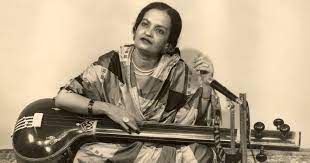
Anindya Banerjee Abstract: This study delves into the captivating world of Indian Ghazal, a poetic and musical genre that transcends boundaries, resonating with the deepest sentiments of the human soul. Focusing on the iconic figure of Begum Akhtar, a legendary Ghazal singer whose artistry left an indelible mark on the cultural landscape of India, the research examines the historical roots, evolution, and unique characteristics of the Ghazal tradition. Begum Akhtar, often referred to as the “Queen of Ghazal,” emerges as a central figure in this exploration, her sublime renditions serving as a lens through which we gain insights into the rich tapestry of emotions woven into the fabric of Ghazal. The paper navigates through the cultural and linguistic diversity of Ghazal poetry, highlighting its themes of love, pain, and mysticism, and how these themes find expression in the haunting melodies and poignant renditions of Begum Akhtar. Additionally, the study sheds Read More …

The Expedition of Grapple and Recognition of Women in Bangla Theatre

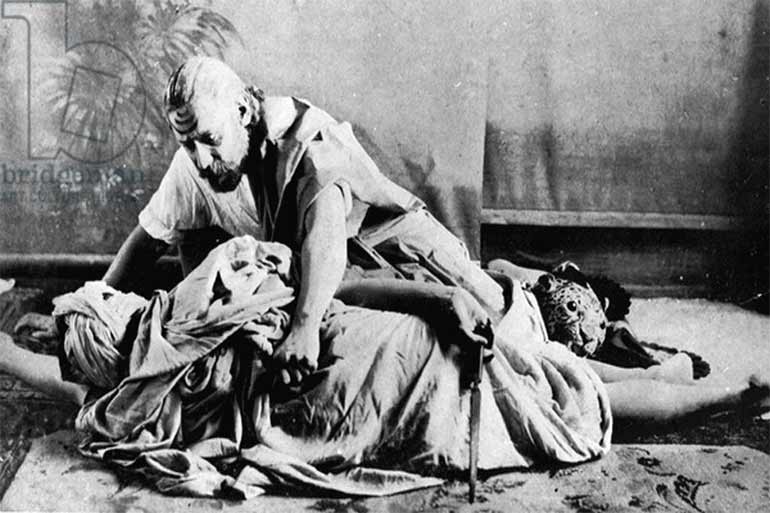
SAYANTIKA GHOSH, PhD Research Scholar, RBU, SACT, Gobardanga Hindu College “The history of men’s opposition to women’s emancipation is more interesting perhaps than the story of that emancipation itself.”                                                                                            Virginia Woolf- Introduction Women of the nation are considered to be the backbone of every society. The introduction of  actresses in Bengali Theatre during 1870 gave a new area to the society. Inspired by the English theatre, the Bengali theatre groups practiced their performances in the houses of the elite people, who are known as “bhadralokhs” of Bengal. The actresses who joined theatre then, were the children from the prostitute area. The talented children from the prostitute areas in order to supplement their income.  Bipin Chandra Pal, in his autobiography mentioned that in the Brahmo Samaj the use of girls from the prostitute families were denied. It was also noted that the presence of the Brahmo women in the audience Read More …

Baiji Culture of Kolkata during Colonial Period: A review

Aritri Majumder, SACT,Department of Music, Gobardanga Hindu College, Ph.D. Research Scholar, University of Calcutta Tradition, the word which carries out many things in one boat. Culture and tradition are interdependent where tradition is a boat and culture plays the role of a sail. Kolkata, the city of joy, borrows its cultural tradition from a long time. On the other side Kolkata always greets and accepts new, so Kolkata is a place where tradition and trend stay side by side. Kolkata is a place of musical heritage as well as it was once the heart of Indian classical music. During British Colonial rule the scenario of India where a tide of transition took place in Indian culture. An obvious effect took place in Kolkata, the city of musical heritage, where classical music was already existed and continued a strong musical tradition of pure classical music from a long time. In 1856, when Read More …

Bonding and Emancipation in Rabindranath Tagore’s Theatrical Narratives

Dr. Srabani Sen Abstract: Rabindranath Tagore, a multifaceted literary luminary, delved into the intricate dynamics of human relationships and societal structures in his plays. This study focuses on the thematic interplay of bonding and emancipation within Tagore’s theatrical works. Tagore, a Nobel laureate poet and playwright, weaves narratives that portray the delicate balance between attachment and the quest for individual freedom. This examination explores how characters in Tagore’s plays navigate the complexities of familial, societal, and romantic bonds, while simultaneously seeking emancipation from the constraints imposed by tradition and societal expectations. By scrutinizing the nuanced character interactions, symbolic elements, and thematic undertones in Tagore’s plays, this research aims to illuminate the profound exploration of human connections and the inherent tension between attachment and the pursuit of personal liberty in the context of Tagore’s dramatic oeuvre. The study contributes to a deeper understanding of Tagore’s philosophical perspectives on the human condition Read More …

রবীন্দ্রনাট্য ঋণশোধ : জীবনবোধের বিস্তারিত অনুভব

ড. রাজশ্রী ভট্টাচার্য , বেঙ্গল মিউজিক কলেজ   প্রকৃতিকে বরণ করেন রবীন্দ্রনাথ অন্তরের অন্ত:স্থল থেকে। প্রকৃতির সঙ্গে প্রাণের সম্বন্ধ তাঁর। সৃষ্টিমূলক বহু রচনায় প্রকৃতির সঙ্গে সম্পর্কের স্বাক্ষর রেখে দিয়েছেন তিনি। তাঁর কবিমানসের স্ফুরণ ঋতুসংগীতে ঋতুনাট্যে ফিরে ফিরে দেখা দিয়েছে। প্রকৃতির সংসারে পাই সৌন্দর্যের সমাহার, যা বৈচিত্র্যময় অথচ নিয়ত শৃঙ্খলামণ্ডিত মঙ্গলদাত্রী রূপের প্রকাশ। ছয় ঋতুর সমাহারে আশ্রিত বাংলার জীবনধারা নিবিড় এক জীবনভাবনা ভাবতে শেখায়, যেখান থেকে হয়তো গড়ে ওঠে কোনো তত্ত্ব বা বিশেষ বোধ। সেই বোধকে মর্যাদা দেন রবীন্দ্রনাথ। এমনই এক বোধিমগ্ন তত্ত্বনাট্যের নাম ঋণশোধ(১৯২১), যার উৎসে আছে শারদোৎসব নাটক (১৯০৮)। বালক উপনন্দর গুরুঋণ শোধের গল্প এই ঋণশোধ। প্রয়াত গুরুর ঋণ শোধ করে শিষ্য উপনন্দ– পুঁথি লিখে। আনন্দের সব দরজা বন্ধ করে এক মনে কাজ সম্পন্ন করতে থাকে। ঋণ শোধ না হলে তার মুক্তি নেই। অবশ্যই সেই মুক্তি তার অন্তরের। আনন্দের সঙ্গে এই দায় সে নিজের ওপর তুলে নেয়। এ তার ভালোবাসার দায়– শ্রদ্ধার, প্রেমের দায়। আপন তাগিদ থেকে আগ্রহ থেকে Read More …