A Drama Exploring the Delicate Balance Between Desires and Necessities

A Drama Exploring the Delicate Balance Between Desires and Necessities Dr. Krisnapada Das Abstract Drama has always mirrored societal changes and served as a powerful tool for both entertainment and social reform. From the early influences of Charyapad and Sri Krishnakirtan, which drew from public life, drama evolved to reflect the socio-political currents of its time. Beginning with the British era, when theatre construction gained momentum, playwrights like Ramnarayan and Michael Madhusudan Dutt laid the foundation for modern drama by integrating epic themes and addressing illusions of traditional forms. Over time, drama transcended entertainment to become a medium for protest, reform, and societal commentary. The socio-political upheavals of the 20th century, including the Partition of Bengal, world wars, and the emergence of movements such as the Communist Party of India, profoundly influenced dramatic narratives. Notable playwrights and directors like Rabindranath Tagore, Tulsi Lahiri, and Bijan Bhattacharya incorporated themes of survival, Read More …

Poush Mela

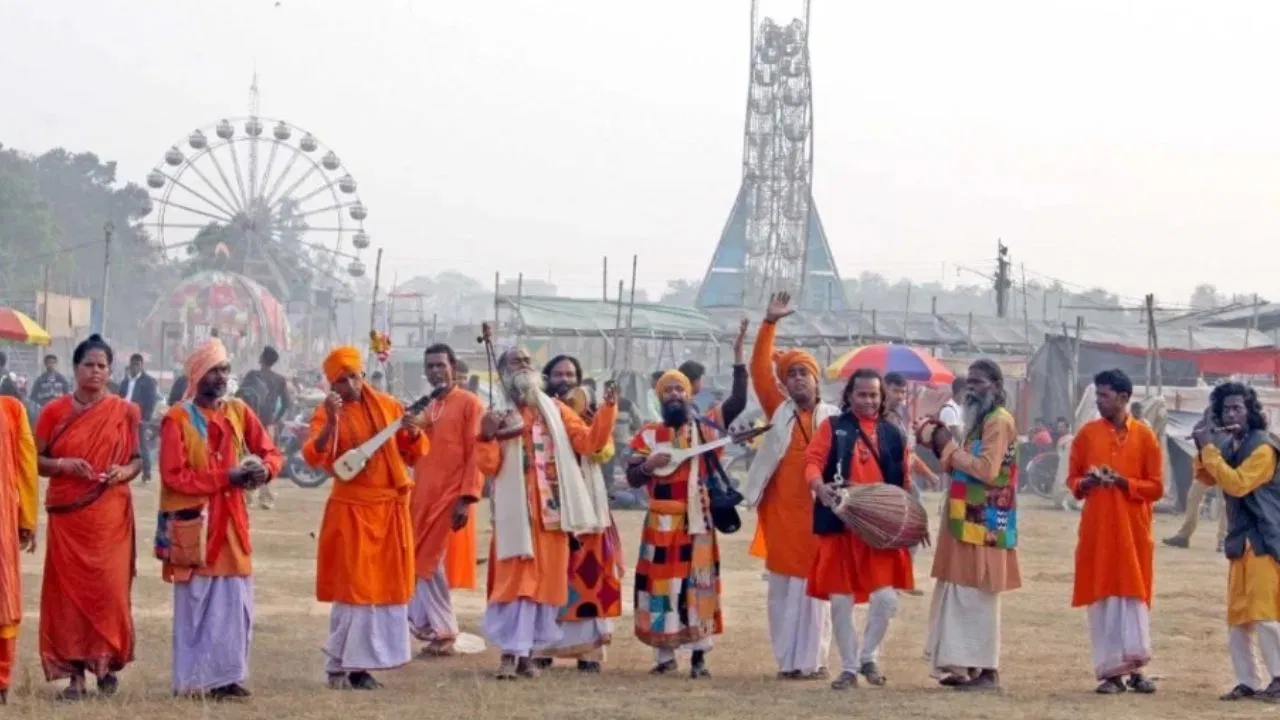
Nandita Basu Sarjajari Assistant Professor, Department of Rabindra Sangeet, Dance and Drama, Sangeet Bhavan, Visva-Bharati, Santiniketan Abstract : The Poush Mela of Santiniketan, inaugurated by Maharshi Debendranath Tagore in 1894, is a significant cultural and spiritual festival of Bengal. It marks the anniversary of Debendranath’s initiation into Brahmanism, influenced by Raja Rammohan Roy’s monotheistic reform movement during the Bengal Renaissance. The event celebrates religious harmony and promotes rural arts and crafts through interfaith dialogues and vibrant marketplaces. The Santiniketan Ashram, envisioned under the serene Chatim trees, reflects Debendranath’s spiritual revelations and ideals. Over the years, Poush Mela has grown into a unique cultural confluence, showcasing performances like Baul songs, Kirtans, Jatra, and traditional crafts, symbolizing Bengal’s diverse heritage. Key Words Poush Mela, Maharshi Debendranath Tagore, Brahmanism, Santiniketan Ashram, Bengal Renaissance, Religious Harmony, Rural Arts, Baul Songs, Rabindranath Tagore, Cultural Heritage পৌষমেলা নন্দিতা বসু সর্বাধিকারী সহকারী অধ্যাপক, রবীন্দ্রসংগীত, নৃত্য ও নাটক Read More …

Rabindranath Tagore and Vaishnava  Literature

Dr. Srabani Sen                                Associate Professor, Department of Music, Tarakeswar Degree College e-mail-srabanisn1@gmail.com  Mobile no- 6290855102 Vaishnava Literature mainly deals with Vaishnava religion and philosophy. Rabindranath Tagore was influenced by Vaishnava literature and philosophy.Tagore was deeply impressed by the works of Govinda Das and wrote many Vaishnava and Baul pieces. In Bhanusingher Padavali literary concepts having an influence of Vaishnava lyrics. Bhanusingher Padavali was composed in Brajabuli language. Tagore emphasizes similarities between Vaishnava Soul Force and Tagore’s Maanvika Bhuma points out the philosophical significance in human- nature relationship. পদাবলী সাহিত্য  ও রবীন্দ্রনাথ বাংলা সাহিত্যে ষোড়শ ও সপ্তদশ – এই দুই শতক জুড়ে মহাজন কবিদের হাতে বৈষ্ণব পদাবলী শ্রেষ্ঠ নমুনাগুলো রচিত হয়েছিল। বৈষ্ণব পদাবলী সুর-সংযোগে গীত হত- এই গানই ‘পদাবলী কীর্তন’। বৈষ্ণব-পদাবলীর পরমরসাস্বাদক শ্রীচৈতন্যদেবের উদার ধর্মভাব ও মানবপ্রেমের প্রতিও রবীন্দ্রনাথ বিশেষ ভাবে আকৃষ্ট হয়েছিলেন। বৈষ্ণব-পদাবলীর বিকাশ ছিল Read More …