Deciphering Melodic Alchemy: A Comparative Study of Melody and Improvisation in Indian Classical and Jazz Fusion

Subhadip Das Designation: UGC NET SRF, Dept. of Hindustani Classical Music, Sangit Bhavana, Visva-Bharati, Santiniketan, West Bengal Abstract The article titled “Deciphering Melodic Alchemy: A Comparative Study of Melody and Improvisation in Indian Classical and Jazz Fusion” explores the complex dynamics that exist within the fusion of Jazz and Indian classical music. This work delves into the convergence and merging of these two distinct musical traditions, which have their own historical origins and developmental paths. The result is an innovative aesthetic form. Commencing with an analysis of the inherently transformative quality that permeates every facet of being, the article proceeds to trace the development of fusion music, elucidating its origins in the amalgamation of varied cultural influences made possible by contemporary globalization. By conducting a thorough examination of melodic concepts in Jazz and Indian music, this article illuminates the underlying principles that govern the respective traditions’ approaches to melody, with Read More …

A Classification of Folk Music Instruments in Western Odisha According to Natya Shastra

Mr. Sunil Mahanand, Assistant Professor Department Of Performing Art, KISS, Deemed to be University, Bhubaneswar, Odisha Abstract: This paper presents a comprehensive classification of folk music instruments in Western Odisha, India, based on the principles outlined in the ancient Indian text Natya Shastra. Folk music plays a significant role in the cultural fabric of Odisha, with a diverse array of traditional instruments enriching its musical landscape. Drawing upon the principles of Natya Shastra, which provides a foundational framework for performing arts, this classification aims to elucidate the typology and categorization of these instruments. The classification considers various aspects outlined in Natya Shastra, including the nature of sound production, material composition, and performance techniques. Instruments are categorized based on their classification as Tantu Vadya (string instruments), Sushira Vadya (wind instruments), and Avanaddha Vadya (percussion instruments), as per the Natya Shastra’s taxonomy. Furthermore, the paper examines the cultural significance and regional variations Read More …

A Classification of Folk Music Instruments in Western Odisha According to Natya Shastra

Mr. Sunil Mahanand, Assistant Professor Department Of Performing Art, KISS, Deemed to be University,Bhubaneswar, Odisha Abstract: This paper presents a comprehensive classification of folk music instruments in Western Odisha, India, based on the principles outlined in the ancient Indian text Natya Shastra. Folk music plays a significant role in the cultural fabric of Odisha, with a diverse array of traditional instruments enriching its musical landscape. Drawing upon the principles of Natya Shastra, which provides a foundational framework for performing arts, this classification aims to elucidate the typology and categorization of these instruments. The classification considers various aspects outlined in Natya Shastra, including the nature of sound production, material composition, and performance techniques. Instruments are categorized based on their classification as Tantu Vadya (string instruments), Sushira Vadya (wind instruments), and Avanaddha Vadya (percussion instruments), as per the Natya Shastra’s taxonomy. Furthermore, the paper examines the cultural significance and regional variations of Read More …

The Extinct Culture of Rarh Bengal’s Kathi Nacher Gaan

THE EXTINCT CULTURE OF RARH BENGAL’S KATHI NACHER GAAN Abstract: The practice of Bengal history in India is quite ancient. `Rarh’ region is a toponym for an area in the Indian subcontinent that lies between the Chota Nagpur Plateau on the West and the Ganges Delta on the East. Looking at the history of Indian music, North Indian music has a significant place, even           `Rarh’ Bangla music has a remarkable place in India. The song of `Kathi Nach’ is the degenerated form of `Rarh Bangla’. When Rarh Bengal was ruled by the feudal lords during that time this stick dance was performed by the pike community with pleasure. They used to perform Kathi Nach on the occasion of any puja. Now a days ,These songs and dance is almost extinct. The song that accompanies with the` Stick Dance’ or `Kathi Nach’ is called` Kathi Nacher gaan’. When the Kathi Nach Read More …

The Cultural Tapestry: Exploring Religion and Identity in Manipuri Dance

Dr. Rinki Mahato, Assistant Professor, Department of Performing Arts, Kiss Deemed to be University, Bhubaneswar & Mr. Sunil Mahanand, Assistant Professor, Department of Performing Arts, Kiss Deemed to be University, Bhubaneswar Abstract: “The Cultural Tapestry: Exploring Religion and Identity in Manipuri Dance” delves into the intricate interplay of religion and identity within the traditional art form of Manipuri dance. This abstract examines how Manipuri dance serves as a reflection of the rich cultural heritage and spiritual beliefs of the Manipuri people, particularly about Hinduism and Vaishnavism. Through an exploration of key themes, symbols, and rituals depicted in Manipuri dance performances, this study illuminates the nuanced ways in which religion shapes the identity and artistic expression of practitioners. By analysing the historical and contemporary significance of Manipuri dance, this abstract underscores its role as a dynamic cultural phenomenon that continues to evolve amidst changing socio-religious landscapes. Title: The Cultural Tapestry: Exploring Read More …

Ajantrik (1958 ) and its Unconventional Background Music by Sarod Maestro Ali Akbar Khan

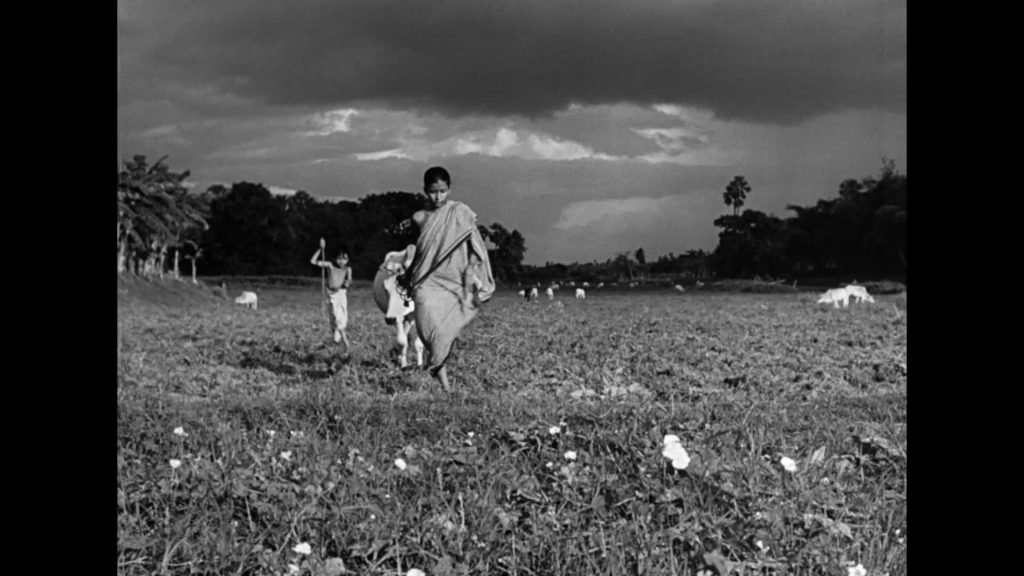
Dr. Sukanya Sarkar Abstract Ajantrik is a film of Ritwik Ghatak based on a short story by Subodh Ghosh. It was released in 1958. The film revolves around the life of a driver Bimal who lives in the Chhotonagpur region. The narrative focuses on the relationship of Bimal with his old car Chevrolet Jalopy of 1920. The film vividly depicts the landscape of the plateau area of Hazaribagh, the folk culture, and rituals of the Jharkhand region. The music of the film is composed by Ali Akbar Khan. Like Ghatak’s other films, Ajantrik is also enriched with natural sound effects of machinery, folk musical instruments and a few pieces of folk songs along with folk dance form by the original inhabitants of the Chhotonagpur region. Ali Akbar Khan wonderfully designed the musical pieces which match with another soundtrack. The subject of the film is very interesting as it deals with Read More …

Continuity of Bhakti movement

Dr. Srabani Sen, Associate Professor, Tarakeswar Degree College Bhakti is a Sanskrit word that means ‘devotion’. The Bhakti movement was a medieval Indian religious and social reform movement that emphasized devotion and spiritual connection with the divine. It aimed to reform society by removing the boundaries of caste, creed and gender between the devotee and God. The Bhakti movement was started with the idea that the best way to reach God is not via rituals or religious rites but through love and worship. The movement was based on religious equality and broad-based social participation. ভক্তি আন্দোলনের ধারা, ড.শ্রাবণীসেন, আ্যসোসিয়েট প্রফেসর,সঙ্গীত বিভাগ,তারকেশ্বর ডিগ্রি কলেজ,তারকেশ্বর,হুগলী ভারতীয় জীবনধারার সাথে ধর্মের সংযোগ অবিচ্ছেদ্য। ভারতের সুলতানি যুগে হিন্দু ধর্মের যাগযজ্ঞ, ধর্মীয় আরম্বর, সমাজের অস্পৃশ্যতা ও জাতিভেদ প্রথার বিরুদ্ধে যে উদার ধর্মীয় আন্দোলন গড়ে উঠেছিল তা ‘ভক্তিবাদী আন্দোলন’ নামে পরিচিত। সময়ের অগ্রগতির সঙ্গে সঙ্গে ভারতের সমাজব্যবস্থায় যে রূপান্তর ঘটেছে, তার মূলে আছে ধর্মভাবনার পরিবর্তন। বৈদিক ব্রাহ্মণ্যধর্মের Read More …