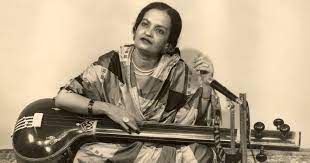
Indian Ghazal through the Melodic Tapestry of Begum Akhtar

Anindya Banerjee Abstract: This study delves into the captivating world of Indian Ghazal, a poetic and musical genre that transcends boundaries, resonating with the deepest sentiments of the human soul. Focusing on the iconic figure of Begum Akhtar, a legendary Ghazal singer whose artistry left an indelible mark on the cultural landscape of India, the research examines the historical roots, evolution, and unique characteristics of the Ghazal tradition. Begum Akhtar, often referred to as the “Queen of Ghazal,” emerges as a central figure in this exploration, her sublime renditions serving as a lens through which we gain insights into the rich tapestry of emotions woven into the fabric of Ghazal. The paper navigates through the cultural and linguistic diversity of Ghazal poetry, highlighting its themes of love, pain, and mysticism, and how these themes find expression in the haunting melodies and poignant renditions of Begum Akhtar. Additionally, the study sheds Read More …

The Expedition of Grapple and Recognition of Women in Bangla Theatre

SAYANTIKA GHOSH, PhD Research Scholar, RBU, SACT, Gobardanga Hindu College “The history of men’s opposition to women’s emancipation is more interesting perhaps than the story of that emancipation itself.”                                                                                            Virginia Woolf- Introduction Women of the nation are considered to be the backbone of every society. The introduction of  actresses in Bengali Theatre during 1870 gave a new area to the society. Inspired by the English theatre, the Bengali theatre groups practiced their performances in the houses of the elite people, who are known as “bhadralokhs” of Bengal. The actresses who joined theatre then, were the children from the prostitute area. The talented children from the prostitute areas in order to supplement their income.  Bipin Chandra Pal, in his autobiography mentioned that in the Brahmo Samaj the use of girls from the prostitute families were denied. It was also noted that the presence of the Brahmo women in the audience Read More …

Baiji Culture of Kolkata during Colonial Period: A review

Aritri Majumder, SACT,Department of Music, Gobardanga Hindu College, Ph.D. Research Scholar, University of Calcutta Tradition, the word which carries out many things in one boat. Culture and tradition are interdependent where tradition is a boat and culture plays the role of a sail. Kolkata, the city of joy, borrows its cultural tradition from a long time. On the other side Kolkata always greets and accepts new, so Kolkata is a place where tradition and trend stay side by side. Kolkata is a place of musical heritage as well as it was once the heart of Indian classical music. During British Colonial rule the scenario of India where a tide of transition took place in Indian culture. An obvious effect took place in Kolkata, the city of musical heritage, where classical music was already existed and continued a strong musical tradition of pure classical music from a long time. In 1856, when Read More …

Bonding and Emancipation in Rabindranath Tagore’s Theatrical Narratives

Dr. Srabani Sen Abstract: Rabindranath Tagore, a multifaceted literary luminary, delved into the intricate dynamics of human relationships and societal structures in his plays. This study focuses on the thematic interplay of bonding and emancipation within Tagore’s theatrical works. Tagore, a Nobel laureate poet and playwright, weaves narratives that portray the delicate balance between attachment and the quest for individual freedom. This examination explores how characters in Tagore’s plays navigate the complexities of familial, societal, and romantic bonds, while simultaneously seeking emancipation from the constraints imposed by tradition and societal expectations. By scrutinizing the nuanced character interactions, symbolic elements, and thematic undertones in Tagore’s plays, this research aims to illuminate the profound exploration of human connections and the inherent tension between attachment and the pursuit of personal liberty in the context of Tagore’s dramatic oeuvre. The study contributes to a deeper understanding of Tagore’s philosophical perspectives on the human condition Read More …

রবীন্দ্রনাট্য ঋণশোধ : জীবনবোধের বিস্তারিত অনুভব

ড. রাজশ্রী ভট্টাচার্য , বেঙ্গল মিউজিক কলেজ   প্রকৃতিকে বরণ করেন রবীন্দ্রনাথ অন্তরের অন্ত:স্থল থেকে। প্রকৃতির সঙ্গে প্রাণের সম্বন্ধ তাঁর। সৃষ্টিমূলক বহু রচনায় প্রকৃতির সঙ্গে সম্পর্কের স্বাক্ষর রেখে দিয়েছেন তিনি। তাঁর কবিমানসের স্ফুরণ ঋতুসংগীতে ঋতুনাট্যে ফিরে ফিরে দেখা দিয়েছে। প্রকৃতির সংসারে পাই সৌন্দর্যের সমাহার, যা বৈচিত্র্যময় অথচ নিয়ত শৃঙ্খলামণ্ডিত মঙ্গলদাত্রী রূপের প্রকাশ। ছয় ঋতুর সমাহারে আশ্রিত বাংলার জীবনধারা নিবিড় এক জীবনভাবনা ভাবতে শেখায়, যেখান থেকে হয়তো গড়ে ওঠে কোনো তত্ত্ব বা বিশেষ বোধ। সেই বোধকে মর্যাদা দেন রবীন্দ্রনাথ। এমনই এক বোধিমগ্ন তত্ত্বনাট্যের নাম ঋণশোধ(১৯২১), যার উৎসে আছে শারদোৎসব নাটক (১৯০৮)। বালক উপনন্দর গুরুঋণ শোধের গল্প এই ঋণশোধ। প্রয়াত গুরুর ঋণ শোধ করে শিষ্য উপনন্দ– পুঁথি লিখে। আনন্দের সব দরজা বন্ধ করে এক মনে কাজ সম্পন্ন করতে থাকে। ঋণ শোধ না হলে তার মুক্তি নেই। অবশ্যই সেই মুক্তি তার অন্তরের। আনন্দের সঙ্গে এই দায় সে নিজের ওপর তুলে নেয়। এ তার ভালোবাসার দায়– শ্রদ্ধার, প্রেমের দায়। আপন তাগিদ থেকে আগ্রহ থেকে Read More …