Strings of Tradition: A Comprehensive Study of the Sitar and Its Glorious Gharanas
Bhabanishankar Dasgupta
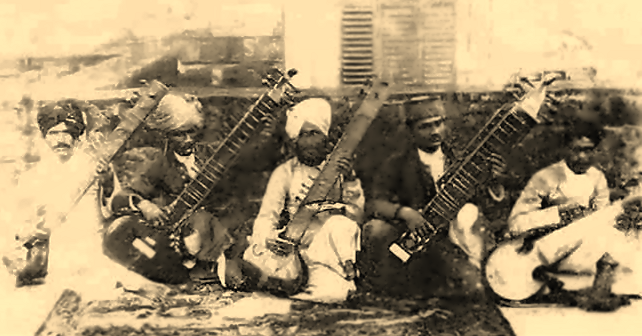
The sitar is one of the most fascinating and popular instruments in North Indian (Hindustani) classical music. It has the unique ability to reflect the profound depths of human emotion through its reverberating gourds, empathetic strings and arched frets, from contemplative introspection (alap) to euphoric, lightning-paced rhythmic patterns (jhala). Northern India has been the birthplace of a galaxy of great musicians who have spent centuries mastering and evolving this intricate instrument.
Sitar performance is not a seamless whole. Instead, its rich tapestry has been preserved, nurtured and passed down within specialised lineages called gharanas. A gharana, from the Hindi word ‘ghar’ (house), is more than a stylistic school; it is a pedagogical lineage, an ideological approach to raga development and a musical family tree. To really understand the architecture of Hindustani instrumental music, one has to go deep into these schools, their original masters and the intricate lineages that connect them to the roots of Indian classical tradition.
The Genesis: The Senia Gharana and the Offspring of Tansen In fact, the history of Hindustani instrumental music is the history of the Senia tradition. “To trace the lineage of the sitar is to trace the eternal echo of Tansen’s veena.” — Traditional Musicological Adage
In order to trace the development of the sitar, one has to go back, inevitably, to the basic pillar of North Indian classical music: Miyan Tansen, the legendary court musician of Emperor Akbar. The various lineages that trace their artistic ancestry directly or indirectly to Tansen are collectively known as the Senia gharana. Tansen himself was a vocalist and a master of the Rudra Veena. But the philosophy of Tansen has been adopted by his descendants for other instruments over the centuries.
The revered sitar player and musicologist Bimala Kantha Roychowdhury has given a meticulous and detailed historical account of the Senia gharana in his seminal treatise Bharatiya Sangeet Kosh. This documentation is an important map to understanding the development of a vocal and veena-centric tradition into the definitive school of sitar playing.
MIYAN TANSEN (Ancestral Root)
│
[Lineage of Descendants]
│
RAJRAS KHAN
│
MASID KHAN (Creator of Masidkhani Gat)
__________│__________
│ │
SUKHSEN BAHADUR SEN
(Died Childless) │
SUKHSEN
│
RAHIM SEN
│
AMRITSEN
Roychowdhury’s records show that Masid Khan, son of Rajras Khan, was a key figure in this lineage. Masid Khan is remembered in the history of music for having created the sitar playing style called the Masidkhani style (or Masidkhani gat). This style adapted the slow, majestic and dignified dhrupad-style temporal structures to sitar, characterised by a specific, standardised plucking pattern ($Da-Rda-Da-Rda-Da-Ra$).
Masid Khan had two sons, Sukhsen and Bahadur Sen, and the line continued. Sukhsen died without issue, but the line of Bahadur Sen carried the torch forward successfully. Bahadur Sen fathered a son, also called Sukhsen, who in turn fathered a son called Rahim Sen. The son of Rahim Sen, Amritsen, would become one of the most celebrated sitar virtuosi of the 19th century, known for his breathtaking speed and technical precision.
The Geopolitical Fracturing: Jaipur, Gwalior
When the Mughal Empire declined, the royal court at Delhi could no longer support its fine musicians. The descendants of Tansen spread out into various princely states, and a geographical and stylistic division of the core Senia gharana was established into two main branches, Jaipur and Gwalior.
• The Jaipur Senia Gharana: Established when the direct descendants of Tansen migrated from Gwalior and settled permanently in the royal court of Jaipur. They kept the puritanical, dhrupad-centric approach to instrumental music.
• The Gwalior Senia Gharana: This gharana was made up of those musicians who chose to stay in the city of Gwalior, the historic musical hub, and adapt their instrumental styles to the fast-growing khayal vocal forms that were becoming popular in the region.
## The Sitar Gharanas
As centuries passed, the musical landscape of India blossomed. The single stream of the Senia tradition split and mixed with regional folk styles, vocal traditions, and individual creative geniuses. Another landmark text, Bharatiya Sangeet Rospi (drawing on the Sangeet Sabdokosh framework) by Dr Bimal Roy, introduces music historians to an expansive network of sitar schools across the subcontinent.
Dr Roy discusses a huge diaspora of gharanas, with their own unique stylistic identities, string-tuning preferences and pedagogic secrets. These are the schools of:
- Jaipur and Gwalior (The chief Senia offshoots)
- Saharanpur, Kalpi, Banda and Etwa (Etawah)
- Maihar, Benaras, Lucknow & Darbhanga
- Dhaka, Mathura, Baroda, Satara, Bombay, Ujjain, Indore and even royal lineages extending as far as Nepal.
Lineage and Transformation Case Studies
To understand how these schools worked, one must look at the lives of the masters who served as a bridge between strict family tradition and revolutionary stylistic evolution.
Amir Khan’s Intersecting World
An intriguing historical figure who captures the porous boundary between the early branches is Amir Khan. It is important to note that this Amir Khan was from the Senia gharana and should not be confused with the legendary 20th century vocalist Ustad Amir Khan of the Indore gharana.
Because this instrumentalist Amir Khan spent considerable periods of his life living and performing in both Jaipur and Gwalior, his name is claimed with pride by both gharanas. Music historians credit Amir Khan with training two very influential disciples, Barkatullah and Imdad Hussain. Though they drank from the same pedagogical well, these two disciples went on to develop vastly different, highly individualised styles that changed the course of sitar history.
AMIR KHAN (Senia Gharana)
___________│___________
│ │
BARKATULLAH IMDAD HUSSAIN KHAN
│ │
ASHIQUE ALI KHAN (See Imdadkhani Tree)
│
MUSTAQUE ALI KHAN
____________________│____________________
│ │ │
ARUN KR. CHATTERJEE DEBABRATA CHOWDHURY NIKHIL BANERJEE
Barkatullah’s Mastery and the Benaras Connection
Barkatullah Khan’s style was followed by his disciple Ashique Ali Khan. Ashique Ali Khan spent much of his career living in the holy city of Benaras (Varanasi), so casual listeners and critics of the day tended to assume that he was an exponent of a local Benaras gharana. In fact, his technical base was firmly rooted in Jaipur Senia Gharana.
Ustad Mustaque Ali Khan, the son of Ashique Ali, became one of the most purist exponents of the 20th century. He famously refused to add the modern sympathetic strings to the sitar, preferring to keep the age-old structure of the instrument. This unbowdlerised wisdom of Senia was passed down by Mustaque Ali Khan to a stellar group of disciples including:
- Arun Kumar Chatterjee
- Debabrata (Debu) Chowdhury, who made the sweet and precise Jaipuri style popular all over the world.
- Pandit Nikhil Banerjee, a visionary who brought this training into seamless confluence with other schools.
- Nirmal Guhathakurta.
The Titans: Maihar Gharana, Imdadkhani Gharana
The modern era of the sitar is dominated by the aesthetic philosophies of two powerhouse schools: the Imdadkhani (or Etawah) Gharana and the Maihar Gharana. Both can be traced back to the Senia lineage, yet they are distinct monuments of musical architecture.
The Imdadkhani (Etawah / Indore) Gharana: Vocalization of Strings A musical sponge, Ustad Imdad Hussain Khan was deeply influenced by the profound stylistic schools of the eminent Rudra Veena wizards Bande Ali Khan and Rajab Ali Khan. “In the hands of the Imdadkhani masters, the sitar ceased to be merely an instrument of percussion and plucking; it became a throat, capable of singing the finest nuances of Thumri and Khayal.” –Raghava R. Menon, Music Critic Imdad Khan’s father, Sahabdad Hussain Khan, had been trained directly by a verified bloodline descendant of Miyan Tansen, Nirmal Shah. The Imdadkhani line thus united the deep roots of Senia with the fluid, vocal-like inflections (gayaki ang) of the veena.
SAHABDAD HUSSAIN KHAN (Learnt from Nirmal Shah)
│
USTAD IMDAD HUSSAIN KHAN
___________│___________
│ │
INAYAT KHAN WAHID HUSSAIN KHAN
│
Ustad Vilayet Khan
______________│______________
│ │
Ustad Imrat Khan, Shahid Parvez, SUJAT KHAN,
(Younger Brother/Disciple) NISHAT KHAN, IRSHAD KHAN
Imdad Khan’s sons, Inayat Hussain Khan and Wahid Hussain Khan, were towering figures who popularised both the sitar and the deep-toned surbahar (bass sitar). Inayat Khan, who spent much of his life in Bengal, generated a huge wave of disciples, institutionalising classical sitar playing among the intelligentsia. Among his notable pupils were the following: • Amiya Kanti Bhattacharyya, John Gomez and Jitendra Mohan Sengupta.
- Jnanada Kanta Lahiri Chowdhury, Dhrubatara Joshi, Bipin Chandra Das.
- The aristocratic patrons of Gauripur, Bimala Kanta Lahiri Chowdhury and Kumar Birendra Kishore Roychowdhury;
Unfortunately, Inayat Khan passed away at a young age, and his son, the legendary virtuoso Ustad Vilayet Khan, was not able to have the opportunity to be trained fully by his father for life. Fuelled by grief and genius, Vilayet Khan practised obsessively, redesigning the sitar’s structure, removing the lowest brass string and tuning it to imitate the human voice. This revolution defined the modern Indore/Imdadkhani gharana.
Vilayet Khan trained a spectacular generation of musicians like his younger brother Imrat Hussain Khan, a surbahar master, Kashinath Mukherjee, Arvind Parekh, Kalyani Roy, and Benjamin Gomez. Today, this tradition is carried forward by international superstars like Ustad Shahid Parvez, Sujat Khan, Nishat Khan and Irshad Khan.
The Maihar Gharana: Architectural Grandeur and World Outreach. ‘Baba Allaudin Khan was not merely a teacher of music; he was a sculptor of souls. He took an old idiom and gave it a global lexicon.
— Pandit Ravi Shankar
If Imdadkhani gharana is praised for its vocal fluidity, Maihar gharana is respected for its majestic structural architecture, vast raga repertoire and inclusion of diverse instrumental techniques. The school was established by the legendary saint-musician Baba Allauddin Khan Sahab.
USTAD WAZIR KHAN (Rampur Senia)
│
BABA ALLAUDDIN KHAN (Maihar Founder)
__________________________│__________________________
│ │ │
PANDIT RAVI SHANKAR, PANDIT NIKHIL BANERJEE INDRANIL BHATTACHARYYA
Baba Allauddin Khan was a disciple of Ustad Wazir Khan, the legendary veena player of the Rampur Senia gharana. Baba Allauddin Khan was primarily a sarod maestro, but his deep understanding of musical physics transformed the tutelage of sitar players. He integrated the rhythmic interplay of the sarod with the long, meditative sweeps of the veena into the sitar’s vocabulary.
His elite crop of sitar disciples changed the world’s perception of Indian classical music for good:
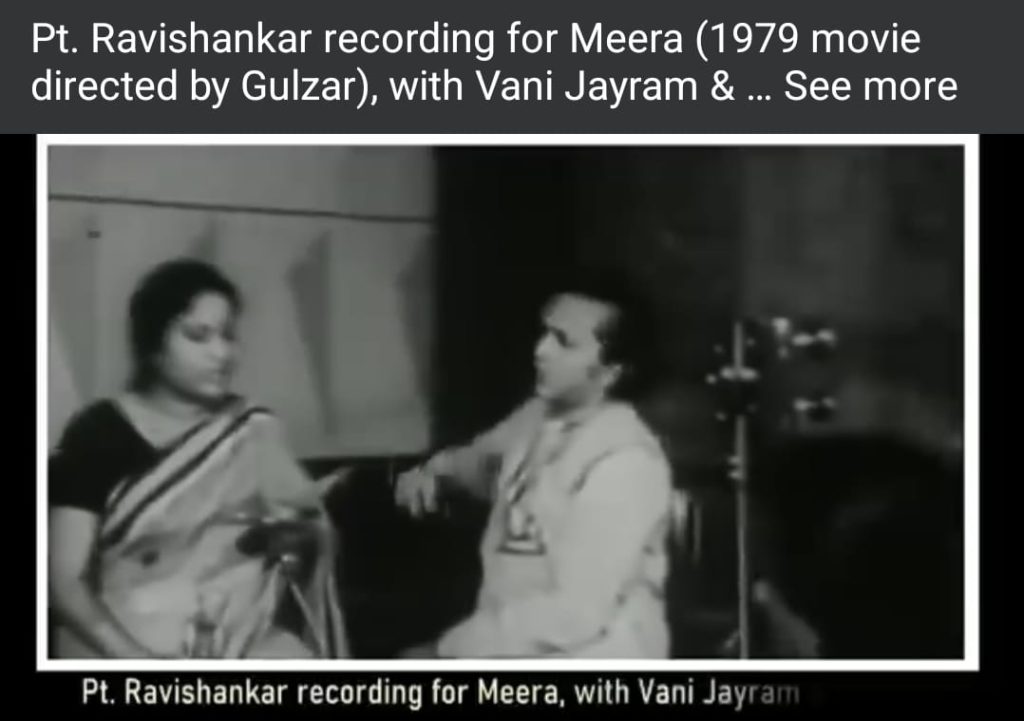
- Pandit Ravi Shankar: A cultural ambassador who introduced the complex rhythmic structures (layakari) and structural symmetry of the Maihar gharana to the global stage, collaborating with Western musicians and introducing millions to the instrument.
- Pandit Nikhil Banerjee: A musician’s musician who married the strict instrumental
discipline of Maihar with the sweet, emotive vocalisms of the Jaipur Senia school to produce an introspective, deeply spiritual style.
- Ali Ahmed Khan and Indranil Bhattacharyya: Purists of the highest order who kept the classical flame burning bright in academic and traditional circles.
Regional Citadels of Sitar Proficiency
The Maihar and Imdadkhani gharanas are very popular today, but there are other gharanas that have made deep historical contributions to Hindustani music.
Lucknow-Kalpi Link
In Uttar Pradesh, Lucknow’s Ustad Yusuf Ali Khan was a towering titan of the instrument. Yusuf Ali had received rigorous training under Ustad Abdul Ghani of the Kalpi gharana. Yusuf Ali Khan’s style was marked by delicate ornamentation, complex phrasing and deep emotional resonance.
His legacy lived on through prominent classical stalwarts: • Sri Bimal Chandra Mukherjee, an extremely learned musician, who also learnt from Ustad Abid Hussain of the Jaipur gharana, thus bridging several schools.
- Ustad Ilyas Khan, who became one of the leading broadcasting artists and teachers of the sitar in Northern India.
- Sashodhar Dutta.
The Vishnupur Gharana and the Classical Sanctuary of Bengal
The Vishnupur gharana of West Bengal is unique because it is located at a distance from the Mughal heartlands and developed as a separate sanctuary of Dhrupad culture. The instrumentalists of this school, Sri Ramprasanna Banerjee, Sri Gopeswar Banerjee and Sri Gokul Chandra Nag, in their quest for refining their art, travelled to learn from Ustad Sajjad Mohammad of the Banda gharana.
Pandit Manilal Nag, son of Gokul Chandra Nag, was one of the most respected and authoritative sitar players of the modern era, characterised by a robust, rhythmic and traditionalist approach. His daughter Mita Nag is one of the best contemporary female icons of the Vishnupur school today who carries this historic flag forward.
The Behari Dhrupad Tradition: The Darbhanga Style
In the district of Darbhanga, Bihar, there was a strong school of instrumental classical music that ran parallel to the famous vocal Dhrupad tradition. The Darbhanga gharana of sitar was characterised by strong plucking styles, intricate mathematical permutations of notes and shunning of excessive romanticised pop influences. Its two greatest exponents were Pandit Ramgovind Pathak and his extraordinarily gifted son, Pandit Balaram Pathak, whose lightning-fast taans (melodic patterns) remain the gold standard among connoisseurs.
Comparative Matrix of Major Gharanas
In order to summarise the vast lineage and stylistic deviations of these schools, the following matrix summarises the defining traits of the primary sitar gharanas discussed.
| Gharana / School | Key Ancestral Figures | Modern / Contemporary Champions | Primary Aesthetic & Technical Focus |
| Jaipur Senia | Masid Khan, Rahim Sen, Barkatullah Khan | Mustaque Ali Khan, Debu Chowdhury | Strict adherence to Dhrupad structure; utilization of the original Masidkhani gat and unaltered sitar frameworks. |
| Imdadkhani (Indore) | Imdad Hussain Khan, Inayat Khan | Vilayet Khan, Shahid Parvez, Sujat Khan | Gayaki Ang (vocal style); modification of the instrument for fluid string-bending (meend) and vocal imitation. |
| Maihar | Baba Allauddin Khan, Ustad Wazir Khan | Ravi Shankar, Nikhil Banerjee | Vast architectural range; heavy incorporation of Tantra Ang (instrumental rhythm), diverse raga knowledge, and global experimentation. |
| Vishnupur | Gokul Chandra Nag, Sajjad Mohammad | Manilal Nag, Mita Nag | Preserves the ancient heritage of Bengal’s Dhrupad tradition; rhythmically precise and deeply meditative. |
| Darbhanga | Ramgovind Pathak | Balaram Pathak | Powerful, complex plucking styles with intricate mathematical subdivisions of the rhythm. |
Conclusion: The Unbroken Thread
The sitar’s evolution is evidence of the resilient and adaptive nature of Indian classical music. From the courtly ordered arrangements of Masid Khan’s Senia lineage to the global stages occupied by the disciples of Baba Allauddin Khan and Ustad Inayat Khan, the instrument has always reinvented itself without sacrificing its soul.
In this day and age, in a world where boundaries are blurring, the young maestros often learn multiple gharanas, combining the vocal sweetness of the Imdadkhani school with the grand architecture of the Maihar tradition or the ancient rhythmic gravity of the Vishnupur line. But at the heart of all modern innovations is the unbroken thread of the Guru-Shishya parampara—the sacred bond of oral transmission that will ensure that the ancient echoes of the Senia gharana will continue to vibrate through the strings of the sitar for generations to come.
References:
Primary Literature & Musicological Treatises
- Roychowdhury, Bimala Kantha. Bharatiya Sangeet Kosh Calcutta, University of Calcutta, 1965.
Note: This basic encyclopaedia is the primary authority for the genealogy of Senia Gharana and traces the lineage from Miyan Tansen to Masid Khan, Rahim Sen and Amritsen. - Roy, Bimal. Bharatiya Sangeet Rospi (Outlines from the Sangeet Sabdokosh). National Publishing House, Delhi, 1982.
Note: This text describes the geographical diaspora and historical classification of the various regional sitar traditions in India, like the schools of Kalpi, Banda and Darbhanga.
Secondary Sources & Historical Lineages
- Bandoyopadhyay, Shripada. The Origin and Development of Sitar. New Delhi: Museum Literary House, 1988.
- Hamilton, Alastair. The Sitar: The History and Development of an Indian Instrument. London: Oxford University Press, 2001.
- Khan, Vilayat. The Evolution of the Gayaki Ang on Strings. Edited by Arvind Parekh. Mumbai: Sangeet Research Academy, 1994.
- Mukherjee, Bimal Chandra. The Lucknow-Kalpi Parampara: A Historical Retrospective of Instrumental Music. Kolkata: Rajya Sangeet Academy, 1978.
- Nag, Manilal. The Vishnupur Gharana: Bengal’s Solo Citadel of Dhrupad and Sitar. Bishnupur: Heritage Preservation Society, 1999.
- Pathak, Balaram. The Architecture of Raga Development in the Darbhanga Tradition. Patna: Bihar Sangeet Natak Akademi, 1985.
- Shankar, Ravi. My Music, My Life. New York: Simon & Schuster, 1968.
Note: Provides firsthand historical insights into the pedagogical methods of Baba Allauddin Khan and the structural evolution of the Maihar Gharana.
Academic Journals & Archival Records
- Dasgupta, Bhabani Shankar. “The Different Gharanas of Sitar: Lineage, Style, and Transformation.” Journal of the Musicological Society of India, vol. 24, no. 2, pp. 45–58.
- Menon, Raghava R. “The Vocalization of Instrumental Strings: How the Imdadkhani School Redefined the Sitar.” Sangeet Natak, Quarterly Journal of the Sangeet Natak Akademi, vol. 41, no. 1, pp. 12–29.