Kulkuloti Brata and Akashpradip: Tradition, Folklore and Contemporary Evolution
Debasish Mandal
Abstract
The present research paper enlightens the tradition and contemporary transformation of “Kulkuloti Brata” a disappearing and unique aspect of the folk culture of Rarh Bengal (mainly the districts of Paschim Medinipur, Bankura and Hooghly) and its counterpart folk ritual, the lighting of the “Akashpradip”. This folk festival is celebrated throughout the month of Kartikh and provides a platform for the rural unmarried girls and married women to seek the well-being of their families and learn the primary lessons of domestic life. It is also a soulful effort to light the way for the departed souls of our ancestors. The paper not only gives an anthropological and social analysis, but also describes the regional variations of the rhymes (chhara) associated with the ritual, its psychological parameters and its latent scientific utility as a light trap for pest control in the local agricultural economy. Finally it highlights the modern crisis and the need to preserve this ancient and rustic tradition in the face of modern urbanisation, technological onslaught and the disintegration of joint families.
Keywords: Kulkuloti Brata, Akashpradip, Folk Culture of Rarh Bengal, Folklore and Rhymes, Ancestor Worship, Agricultural Science, Light Trap, Contemporary Crisis and Extinction.
______
The Bengali people do not live by a rigid code of conventional scriptural religion; they are fed by natural and folk culture. In the social psyche of Rarh Bengal, vows and festivals (brata-parban) are not just religious rituals; they are living testimonies to collective joys, sorrows, aspirations and an intimate relationship with nature. In his book Banglar Lokasamskriti (Folk Culture of Bengal) Dr. Ashutosh Bhattacharya wrote:
“Whatever else the folk rituals of Bengal may be, they do not belong to any high spiritual practice. They are fully created by worldly desires and the desire for daily happiness and prosperity in folk life.” [1]
One such unique folk festival is the ‘Kulkuloti’ or ‘Kulkulti’ Brata which is celebrated throughout the month of Kartikh in the vast rural areas of Paschim Medinipur, Bankura and Hooghly districts. This ritual conveys deep respect for the ancestors, prayers for the welfare of the family and lineage (kul), and the basic lessons of home life for young girls and newly married women. This paper discusses in detail the outline, rituals and social-anthropological significance of this fading folk tradition.
The Kulkuloti Brata is mostly restricted within the geographical boundary of Rarh Bengal. It is a common practice in the agrarian rural societies of Bankura, Paschim Medinipur and Hooghly districts. Of particular importance in the Bengali seasonal cycle is the transition from autumn (Sharat) to late autumn (Hemanta). The month of Ashwin is dedicated to the worship of Goddess Durga and later Lakshmi Puja and Kali Puja. This autumn and late-autumn festive atmosphere binds rural society in a continuous stream of joy.
| Bengali Month | Festivals Celebrated (Folk and Scriptural) |
| Ashwin | Kojagori Lakshmi Puja, Durga Puja |
| Kartikh | Kulkuloti Brata (month-long), Akashpradip (Swargabati), Kali Puja, Kartik Puja |
| Agrahayan | Nabanna Festival, Itu Puja |
| Poush | Tusu Festival, Poush Lakshmi Brata, Vastu Puja |
The ritual is observed throughout the month from the first day of Kartikh to the last day (Kartikh Sankranti). These three months (Kartikh, Agrahayan and Poush) were also the months of celebration in the rural Bengal. All are involved, directly or indirectly, young or old. But generally, the main performers of this ritual are rural unmarried young girls and newly married women. The “Kulkuloti” or “Kulkulti” name and origin, when examined, brings out two main folk concepts:
From the anthropological point of view, this ritual is a mixed form of animism and ancestor worship. During this sacred month the rural people believe that the departed ancestors come down near the earthly realm. The light festival is celebrated to bring peace to their souls and to ask their blessings on their earthly descendants. It’s a very human desire, to bring light to those we love who are gone.
Literally and in the folk sense, ‘kul’ means lineage, clan, or family. The ritual is called “Kulkuloti” or “the lamp of the lineage” and aims to secure the happiness, prosperity and long life of the family and ensure that the lamp of the lineage is never extinguished.
The beauty of the Kulkuloti Brata lies in its folk simplicity and the involuntary involvement of children. The main observers of this ritual are young girls but young boys of the household also take part in it eagerly.
Preparations start in rural households long before the month of Kartik. Young girls clad in the old sarees of their grandmothers or mothers become the household matriarch (ginni). Through this role-play they get their initiation or their first lessons for their future domestic lives. The ritual calls for a large number of clay lamps.
The girls collect soft mud from the banks of rivers or ponds and make small lamps with great care. These are then sun-dried. Some people bake the lamps lightly over a wood fire or hearth to make them strong. We need a great many lamps for the whole month, for each evening three lamps must be lit. There is an innocent healthy competition among the children about whose lamp looks most beautiful and who can make the most lamps.
The proverb ‘The Bengali has thirteen festivals in twelve months’ is ingrained in the agrarian society and folk religious practices of Bengal. This unusual folk ritual comes in the arid hours of Kartikh as the lights of Ashwin’s Durga Puja and Kojagori Lakshmi Puja dim. It is a month-long ritual that invokes the well-being of the lineage and a soulful effort to light the way for the departed souls of ancestors. This essay discusses in detail the social significance of this near-extinct rural festival, the transformation of its associated rhymes and chants, its scientific utility and its contemporary crisis.
The geography of Bengali festivals is inherently connected to seasonal and crop cycles. If Ashwin is the month of power, worship and autumn festivals, Kartikh is a time of transition. Right after this, Agrahayan brings in Nabanna for harvesting new crops and Itu Puja as a form of worship of the sun. In the biting cold of Poush, the ‘Tusu Festival’ and the Lakshmi Brata of Poush Parban are observed.
In a statement on social media, prominent folk culture researcher of the Garhbeta region Tapan Acharya said:
“The three months of rural festivals from Kartikh to Poush passed in the blink of an eye, as every year. The festivals centring around Garhbeta and adjacent villages have been held since time immemorial and fall within Garhbeta’s own unique festival and culture. But under the touch of modernity the three main festivals of these three months have now become marginal.”[2]
These rituals look religious on the surface, but are essentially secular folk traditions led mainly by young girls and married women. These vows have been kept for generations, a protection for the family and an expression of the daily joys and sorrows and hopes of country life.
The preparation for this ritual involves small clay lamps locally known as kulobati. In reminiscence of her childhood, folk researcher Soma Dutta writes:
“When we were children, all the cousins used to gather to do the Kulkuloti Puja… bringing earth from the base of the jujube (kul) tree by the pond… rolling that earth into round lamps like this… drying them on the roof in the sun and coloring them as we liked… For the whole month of Kartikh, every evening, we would worship the clan goddess with three of these lamps, jujube leaves and jujubes, praying for the immortality of our three lineages (paternal, maternal and in-laws)…”[3]
In the evening, a small pit is made in front of the Tulsi altar and filled with water and worshipped with jujube leaves, durva grass and holy basil leaves. Before lighting the lamps it is a custom to take water from the pond. While doing so, people chant rhymes to the water goddess or Jalkumari. Water is fetched from the pond and poured at the base of the Tulsi plant with chants and rhymes recited to invoke the divine and lamps are lit.
The Kulkuloti Brata rhymes reflect the psychology of rural women, family aspirations and social realities like co-wife rivalry. The form and the melody of these rhymes do vary from place to place, but the sentiment they express is always the same. They are sung usually in chorus in the manner of a ballad.
“জলে আছে জলকুমারী,
ডাঙায় আছে হরি,
এক ঘটী জল দাও মা,
হরিপূজা করি।”[৪]
“সাঁঝসলতে পরমবাতি,
সন্ধ্যে দেখায় ভগবতী,
কোথায় আছে দেবগণ,
সন্ধ্যে দেখায় নারায়ণ।”৪]
The desire for a long and healthy married life in these rhymes is a symbol of the aspirations of young girls. At the same time another rhyme is recited pouring water on Tulsi plant seeking space and grounding from the core of the heart.
“সাঁঝসলতে পরমবাতি,
সন্ধ্যে দেখায় ভগবতী,
কোথায় আছে দেবগণ,
সন্ধ্যে দেখায় নারায়ণ।”[৪]
Another variation from Bankura and nearby regions depicts a sister’s pure love for her brothers. It talks about making garlands of flowers, of lights and putting fragrance on small rafts that float. Hoping that the fragrance will reach the seven brothers wherever they are.
“কুলকুলতিকুলের বাতি,
তোমার তলায় দিয়ে বাতি,
অরণঠাকুর বরণে,
ফুল ফুটেছে চরণে।
এ ফুলটি যে তুলবে,
সাত ভাইয়ের বংশে,
সাবিত্রী সত্যবান।
কার্তিক মাসে রাসে,
ধুপধুনো বাসে,
ধুপ, দীপায় নমঃ।”[৫]
“তুলসী তুলসী মাধবলতা,
ও তুলসী কৃষ্ণ কোথা?
কৃষ্ণ গেছে গোচারণে।
তোমার শিরে ঢালি জল,
অন্তর থেকে দিও স্থল।”[৬]
“কুলকুলোতি কুলোবতী, / সাত ঘরে নিয়ো বাতি ৷
অরুণ ঠাকুর বরণে, / ফুল ফুটেছে চরণে ৷
এই ফুলটি যে নেবে, / সাত ভাইয়ের বোন হবে৷
কার্তিক মাসে রাসে, / ধূপধূনো ভাসে৷
ফুলমালা আর আলোর মালা, / ছোট্টো ভেলা দোলায় দোলা৷
কুলোবতীর হাতের নাড়া, / ভেলা ভাসে গন্ধে ভরা৷
এই গন্ধ যেদিক যায়, / সাত ভাই পাই সেথায় ৷
এসো আমার সাত ভাই, / তার জন্য ভেলা ভাসাই ৷”[৭]
“কুলগাছ কুলগাছ ঝাঁকুড়ি, / সতীন বেতীন মাকুড়ি,
সাত সতীনের সাত কৌটা, / আমার একটি নবকৌটা;
নবকৌটা নড়ে চড়ে, / সাত সতীনের মুখটি পোড়ে।
ওরে পাখি ময়না, / সতীন যেন হয়না।”[৮]
Another important text on the folk culture of the Garhbeta region of Medinipur highlights an ancient social layer of co-wife rivalry. These rhymes echo the historic pain and insecurity in the inner quarters of the rural Bengali household with regard to polygamy, that is, unconsciously through these childhood rhymes girls pray not to meet a co-wife.
Banana Raft Floating and Immersion on the Last Day of Month
The vow ends on the last day or Sankranti of the month of Kartikh. This day is filled with joy and the sadness of departure. On this day, offerings are made of chira, milk, bananas, batasa, and different kinds of fruits.
Banana stems are cut into small rafts and set adrift in ponds or rivers before sunrise, braving the piercing cold of the next morning. They are small rafts, with lamps, candles, jujube leaves, and flowers. The children sing a chorus to the rafts as they say goodbye. The floating points of light drift into the distance, which, according to folk belief, carries the light to the departed ancestors. The children would have a harmless competition as to which lamp would last the longest.
Akashpradip Or Swargabati: Light for the Forefathers
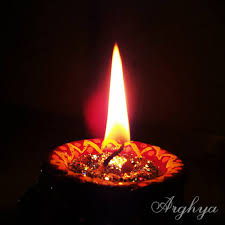
Apart from the Kulkuloti Brata, there is a very ancient custom in Hindu society, especially in Rarh Bengal, of lighting the “Akashpradip” or “Akash Batti” throughout the month of Kartikh. A long bamboo pole is fixed in the courtyard or by the pond. On the top of the pole a lamp of sesame oil or clarified butter (ghee) is hung in a square bamboo frame or covered with coloured paper or in a lantern.
Social worker. In this connection H. Saha wrote: During the nights of Kartikh, Hindus light the Akash Batti or Akash Pradip… Folk belief holds that this path of light is where ancestors come down from heaven to see how their descendants are doing back at the homestead they left behind.[9]
Different linguists and lexicographers interpret it differently. Subal Chandra Mitra’s Saral Bangala Abhidhan and Gyanendramohan Das’s Bangala Bhashar Abhidhan state that this lamp is mainly offered to Lakshmi-Narayan in the month of Kartikh. Elsewhere the Vaishnava text Sri Hari-bhakti-vilasa (16th Vilasa) and the Skanda Purana state that giving a lamp in a temple or skywards during Kartikh pleases Lord Hari Himself and destroys the sins of many lives.
The month of Damodar, or Kartikh is of great significance in Sanatan traditions as the month of Lord Vishnu, which is a month of self-restraint and sacrifice. According to the scriptures like Padma Purana, whoever offers a lamp to Lord Vishnu during this holy month, all his sins are destroyed, and he is relieved from the cycle of rebirth. Best to use earthen lamps filled with oil and lit with wicks dipped in ghee, sesame oil or camphor. As the flame removes physical darkness, so devotion and knowledge remove spiritual sins. [10]
Anirban Chowdhury interprets the lamp in psychological and philosophical terms. According to him, the lamp is a symbol for the transient human body made of the five elements (Pancha Bhoota) which acts as a medium of self-surrender to God. A particular mantra in Sanskrit is chanted during the offering, which means that the light is offered to Vishnu, who is in the skies with Goddess Lakshmi. [11] In addition, records related to the Varendra region of Bengal shows the manner in which these lamps were lit in every ancestral homestead to aid the ascent of the departed souls to heaven.
A comparative study on Kulkuloti and Yamapukur Brata
Kulkuloti” and “Yamapukur Brata” are mainly synonymous or complementary according to Sufal Chandra Bag, a renowned folk artist and cultural worker of Hooghly district.[12] The primary aim of both vows is to please Yama, the god of death, to prevent the family from early death, although there are some differences in rituals in different regions. However, the main focus of the Yamapukur Brata is the edge of a miniature symbolic pond excavated on the ground in which clay figurines (Yama, Yami, crocodiles, sharks) are placed, whereas Kulkuloti is concerned with the Tulsi altar and the floating of banana rafts.
Scientific and Agricultural utility of the vow
In folk culture there is a hidden scientific or environmental reason behind every ritual. For a whole month Kulkuloti lamps are lighted and Akashpradip is lighted, behind which is hidden an absolute truth of Bengal’s agrarian economy.
| Folk Element | Agro Science Description | |
| Milky stage of Aman rice | The grains in the ear of Aman rice start to form and have a sweet milky fluid in the month of Kartikh. |
| Pest Attacks | In this period, fields are attacked by an outbreak of large numbers of small green harmful insects including leaf hoppers (Shyamapoka) which suck the sap of rice crops and destroy harvests. |
| Light Trap | Insects are attracted to the light sources naturally created by lighting lamps at the Tulsi altar of every house, high up in courtyards (Akashpradip) and on water bodies (rafts). |
| Ecological Control | The pests are killed by the heat of the flame or attracted by the floating lamps to fall into the water where they are eaten by fish, thus protecting the crops naturally. |
Then comes the custom of burning Maoragach (dry palm leaves tied to bamboo poles) on the night of Kali Puja to rid the pernicious pests in the fields, which is a continuation of this primitive agricultural science.
Modern Crisis and Extinction
This folk festival, which survived gloriously till the late 19th and 20th centuries, is now on the verge of extinction due to modern urbanization, technological encroachment and the breakdown of joint families. A survey of the blog Diganta, which has been well able to capture this contemporary crisis, states that, “The ritual has stopped entirely in many neighbourhoods and the younger generation has not even heard of it.”
The present generation has become alienated from the rustic festival by smartphones, artificial lighting and a lack of interest in folk beliefs. The innocent competition of making lamps or the joy of bathing in ponds in the freezing morning chill to float rafts is no longer part of today’s mechanical urban life.
The “Kulkuloti” Brata was not just a collection of rhymes or the act of lighting the lamps, it was an engine of social bonding in rural Bengal, a joyful learning experience of childhood and an excellent manifestation of indigenous environmental science. In the songs of this ritual are concealed the eternal love of brothers and sisters, domestic peace and the man’s gratitude to nature. The efforts of the elders to pass on the making of lamps in our present mechanical age when these traditions are being lost, so that even if the younger generation does not observe the vow they will at least remember the heritage[13], are of great relevance.
We have a common responsibility to record these folk traditions and pass on their cultural and environmental significance to the new generation.
Bibliography
[1] Bhattacharya, A. (1982). Banglar Loksanskriti New Delhi : National Book Trust,
[2] Facebook Post by Tapan Acharya, Folk Festivals of Garhbeta District.
[3] Dutta, Soma. Post on Facebook. Kulobati and childhood memories.
[4] Sambad Pratidin (E-paper edition). https://epaper.sangbadpratidin.in/epaperpdf/epaper/2018-12/5c1d8e2314e73.pdf
[5] Kulkulti Brata, Jiyo Bangla Web Article.
https://www.jiyobangla.com/bn/news/kul-kulti-a-rare-folk-culture-of-bengal-what-is-kulkulti-brata
[6] Jaladarchi Web Portal Post. https://www.jaladarchi.com/2022/11/kulkulti-vaskarbrata-pati.html
[7] Kabita Ghosal Ghosh, Facebook Discussion, Folk Elements and Rhymes of Kulkuloti Brata.
[8] Anamika Sarkar, Facebook Post, Memories of Kulkuloti and Tusu Festival of Garhbeta.
[9] D. H. Saha, Facebook Post, On Akashpradip and Swargabati.
[10] Sanatan Religious Discussion Forum, Facebook Group Post. https://www.facebook.com/groups/270667561139277/posts/1113294383543253/
[11] Anandabazar Patrika Digital Edition, Ananda Utsav
[12] Interview based opinion of Sufal Chandra Bag (Jatra Artist and Folk Music Researcher, Kalipur, Hooghly).
[13] Soma Dutta, Family Rituals and Traditions of Lamp Making.